























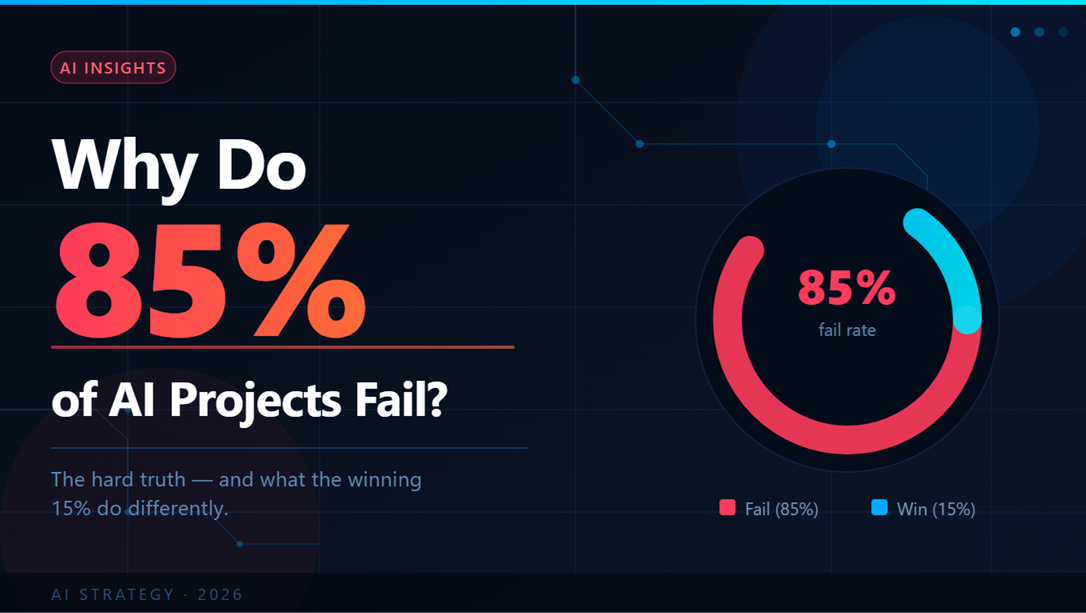
Why Do 85% of AI Projects Fail? (And How to Be in Winning 15%)
Why Do 85% of AI Projects Fail? (And How to Be in the Winning 15%)
Most AI projects fail. Not some. Not a few edge cases where the team was underfunded or the timeline was unrealistic.

Ready to Automate Your Success?
From AI-powered applications to scalable software development, we help businesses automate workflows and accelerate growth.
Book a Free ConsultationMost AI projects fail. Not some. Not a few edge cases where the team was underfunded or the timeline was unrealistic. We are talking about the majority of AI initiatives across well-funded companies, experienced teams, and industries that should know better by now.
RAND Corporation put the number at over 80%. MIT's research from 2025 found that 95% of generative AI pilots delivered zero measurable return on investment. Zero. Not low returns. Not disappointing returns. Nothing. And S&P Global found that 42% of companies had already abandoned most of their AI initiatives in 2025, compared to just 17% the year before.
So if your AI initiative stalled, got quietly shelved, or never made it past the demo stage, you are in very large company.
The real question is why this keeps happening, and more importantly, what the organizations that actually succeed are doing differently.
First, Let's Talk About What "Failure" Actually Means Here
Before diving into causes, it is worth defining what we mean when we say an AI project failed.
It is not always a dramatic collapse. Sometimes it is a pilot that ran for eight months, impressed everyone in the boardroom, and then never made it to production. Sometimes it is a machine learning model that technically works but produces outputs nobody trusts enough to act on. Sometimes it is a $2 million investment that generated a report and a lessons-learned document.
Gartner found that on average, only 48% of AI projects ever reach production. The average company scraps nearly half its AI proof-of-concepts before they ever create real value. Global AI spending is projected to hit $630 billion by 2028. With failure rates this high, we are talking about hundreds of billions of dollars essentially evaporating.
That context matters, because the causes of failure are not exotic. They are painfully predictable. And that means they are also avoidable.
Data Problem Nobody Wants to Talk About
Here is something that surprises a lot of business leaders when they first hear it: the AI model is almost never the reason a project fails.
Think about that for a second. Companies spend enormous energy evaluating AI vendors, comparing large language models, debating between open source and proprietary tools. And yet Gartner found that 85% of AI projects fail because of poor data quality or a lack of relevant data, not because they picked the wrong model.
Informatica's 2025 CDO Insights survey backed this up. When they asked organizations to name their top obstacle to AI success, 43% cited data quality and readiness. Another 43% pointed to a lack of technical maturity. Skills shortages ranked third at 35%.
The core issue is that AI-ready data is genuinely different from the data most organizations already manage. Legacy data systems were built for reporting, dashboards, quarterly reviews, and compliance audits. They were not built to feed a machine learning model that needs clean, consistent, continuously updated information to produce outputs a business can trust.
When you train an AI on fragmented, inconsistent, or outdated data, you get fragmented, inconsistent, and outdated results. People stop trusting the outputs. The project gets shelved. The vendor gets blamed. And nobody learns the real lesson.
Chasing AI Without Knowing Why
There is an uncomfortable truth buried in a 2024 Gallup poll. Only 15% of US employees said their workplace had communicated a clear AI strategy to them.
Meanwhile, McKinsey found in 2025 that 92% of executives planned to increase their AI spending over the next three years.
Read those two numbers together and the problem becomes obvious. Executives are pouring money into AI while their own employees have no idea what the strategy is or what success is supposed to look like. That is not an AI problem. That is a leadership problem dressed up as a technology problem.
Organizations that rush into AI because a competitor announced something, or because the board asked about it in the last quarterly review, tend to skip the most important question: what specific business problem are we trying to solve? Not in a vague, strategic sense. Concretely. With a measurable outcome. With a timeline. With a clear definition of what done looks like.
Without that, teams build technically impressive things that solve the wrong problem. Or they build the right thing but cannot explain its value to the people who need to approve continued investment. Either way, the project dies.
Leadership Is the Actual Bottleneck
This finding from RAND Corporation stopped me when I first read it.
Their 2024 research found that 84% of AI implementation failures are leadership-driven, not technical. Not the data. Not the algorithm. Not the infrastructure. Leadership.
That is a confronting number. And it makes sense when you see what leadership failures actually look like in practice. Executives approve AI budgets but do not allocate resources for data infrastructure or change management. Different departments run competing AI initiatives with no coordination. Middle managers quietly resist implementations that threaten familiar workflows. Boards demand AI results on software timelines when AI initiatives often take two to four years to generate meaningful ROI.
Vendors promise value in seven to twelve months. The reality, according to multiple studies, is closer to two to four years. When leadership does not understand that gap, they kill projects that were actually on track.
Talent Gap Is Wider Than You Think
Finding good AI talent is hard. Everyone knows this. What fewer people acknowledge is that the problem runs much deeper than just hiring machine learning engineers.
Informatica's survey found 35% of organizations flagged skills and data literacy as a major obstacle. Deloitte's research found that in nearly half of all organizations, employees lack the data literacy needed to use AI-driven insights even when the tools are already in place.
This creates a painful dynamic. The technical team builds something. The business team does not understand it well enough to trust it. Nobody uses it. The project loses momentum and eventually dies, not because the technology failed but because the humans on either side of it could not connect.
This is exactly where experienced AI software development services fill a critical gap. A good AI development partner does not just build the model. They translate between technical capability and business need. They help define what success actually looks like before a single line of code is written. They make sure the people who will use the system understand it well enough to actually use it.
For companies that have tried to build AI capability internally and stalled, this kind of partnership often makes the difference between another abandoned pilot and something that reaches production and delivers results.
Infrastructure Is More Expensive Than the Demo Made It Look
Here is a pattern that plays out constantly. A company runs a promising AI pilot in a controlled environment. The demo is clean and fast. Stakeholders are excited. Then the team tries to scale it to real production data, real traffic, and real business complexity. Everything slows down, breaks, or costs three times what anyone budgeted.
Legacy data warehouses were not built for real-time AI workloads. On-premise infrastructure creates serious bottlenecks. The computing resources needed to train and run models at scale can be shocking if you have never done it before.
Smaller organizations feel this most acutely. Without a dedicated IT team that understands AI infrastructure requirements, the gap between a pilot that works and a system that works in production can become an insurmountable wall.
Pilot Purgatory Is a Real Place and a Lot of Companies Live There
MIT researchers gave a name to one of the most common AI failure modes: pilot purgatory. It describes AI projects that work in demos but never reach production. They live in a permanent state of almost, burning budget and organizational goodwill while delivering nothing.
Gartner predicts that 60% of AI projects lacking AI-ready data will be abandoned through 2026. The bottleneck is almost always the same thing. There is a massive gap between a demo that impresses people in a conference room and a production system that integrates with real workflows, handles real data volumes, and produces outputs that a business actually uses to make decisions.
Closing that gap requires more than machine learning expertise. It requires software engineering, data infrastructure, change management, and a team that has navigated that journey before.
Nobody Uses a Tool That Does Not Fit Their Day
Even technically successful AI projects fail if adoption is low. And adoption is low when the tool does not fit naturally into how people already work.
This sounds obvious. In practice, it gets overlooked constantly. Teams build AI capabilities and then announce them to employees, expecting enthusiasm. When the tool requires behavioral changes, adds steps to existing workflows, or produces outputs that are hard to interpret, people avoid it. Without users, there is no feedback. Without feedback, the model cannot improve. The project quietly dies from neglect.
The organizations that get this right treat integration as a first-class requirement from day one, not a post-launch problem to solve later. They involve end users during design. They reduce friction at every step. They make the AI capability feel like a natural extension of work people were already doing.
What the 15% Actually Do Differently?
There is a Forrester finding worth sitting with for a moment. Successful AI implementations produce an average return on investment of 383%. That is not a rounding error. That is a fundamentally different business outcome.
The organizations that reach that level are not using better technology. They start with AI-ready data before committing to any initiative. They define measurable business outcomes before building anything. They have executive sponsors who understand what the project requires and actively protect it. They treat AI workflow integration as foundational. And they build feedback mechanisms into every system they deploy so the model improves with real-world use.
Many of them also work with experienced AI software development partners who have navigated these exact challenges before. Not as a shortcut, but because the expertise gap is real and building it entirely in-house takes longer than most businesses can afford to wait.
Conclusion
The 85% failure rate is not a technology story. It never was.
It is a story about companies adopting AI before their data was ready. About leaders approving investments they did not fully understand. About teams building solutions to the wrong problems. About pilots that nobody scaled because nobody built a bridge between the demo and the real world.
None of these are insurmountable problems. They are organizational and strategic challenges, which means they are solvable with the right preparation, the right expertise, and leadership willing to ask hard questions before the budget gets spent.
If you are planning an AI initiative, or trying to rescue a stalled one, start there. Not with the model. Not with the vendor. Start with your data, your goals, and an honest assessment of whether you have the people and process in place to see it through.
That is where the 15% begin.
Frequently Asked Questions (FAQs)
Everything you need to know about our products and services
Enterprise AI projects often fail due to unclear use cases, fragmented data, unrealistic expectations, insufficient change management, and poor integration with enterprise systems. Success depends on aligning AI initiatives with measurable business goals.
Enterprise AI projects fail when they lack a clear business strategy, reliable data, governance, and user adoption. To scale successfully, organizations should start with high-impact use cases, integrate AI into existing workflows, establish governance, and continuously measure business outcomes.
Many AI implementations fail because organizations prioritize technology over business outcomes. Common causes include unclear objectives, poor data quality, weak governance, limited user adoption, and a lack of integration with existing business processes.
To reduce the risk of failure, start with a clearly defined business problem, ensure high-quality data, involve stakeholders early, integrate AI into existing workflows, establish governance, and measure success using business-focused KPIs.
AI outputs often fail because of poor data quality, unclear instructions, limited context, weak system integration, or insufficient human oversight. Improving data, refining prompts or workflows, adding validation steps, and continuously monitoring performance can significantly improve results.





Adnan Ghaffar is the visionary CEO of CodeAutomation.ai, a platform dedicated to transforming how businesses build software through cutting-edge automation. With over a decade of experience in software development, QA automation, and team leadership, Adnan has built a reputation for delivering scalable, intelligent, and high-performance solutions.
Under his leadership, CodeAutomation.ai has grown into a trusted name in AI-driven development, empowering startups and enterprises alike to streamline workflows, accelerate time-to-market, and maintain top-tier product quality. Adnan is passionate about innovation, process improvement, and building products that truly solve real-world problems.
More Articles
24/09/2026
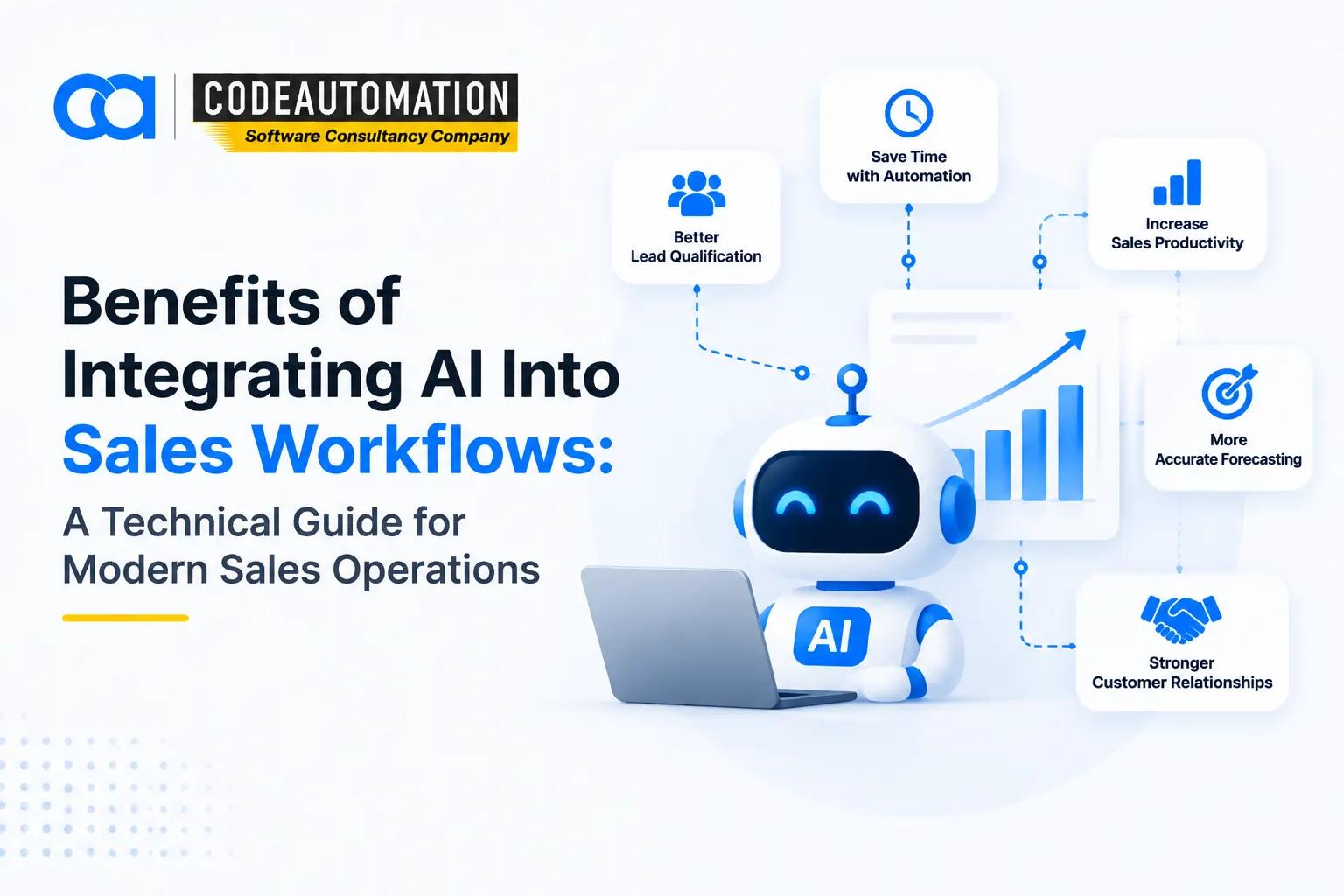
Benefits of Integrating AI Into Sales Workflows: A Technical Guide for Modern Sales Operations

15/ 04/ 2026
AI virtual assistants for business: Use cases and benefits

15/09/2026
AI Supply Chain Optimization How Businesses Use AI to Reduce Costs and Improve Efficiency
04/09/2026
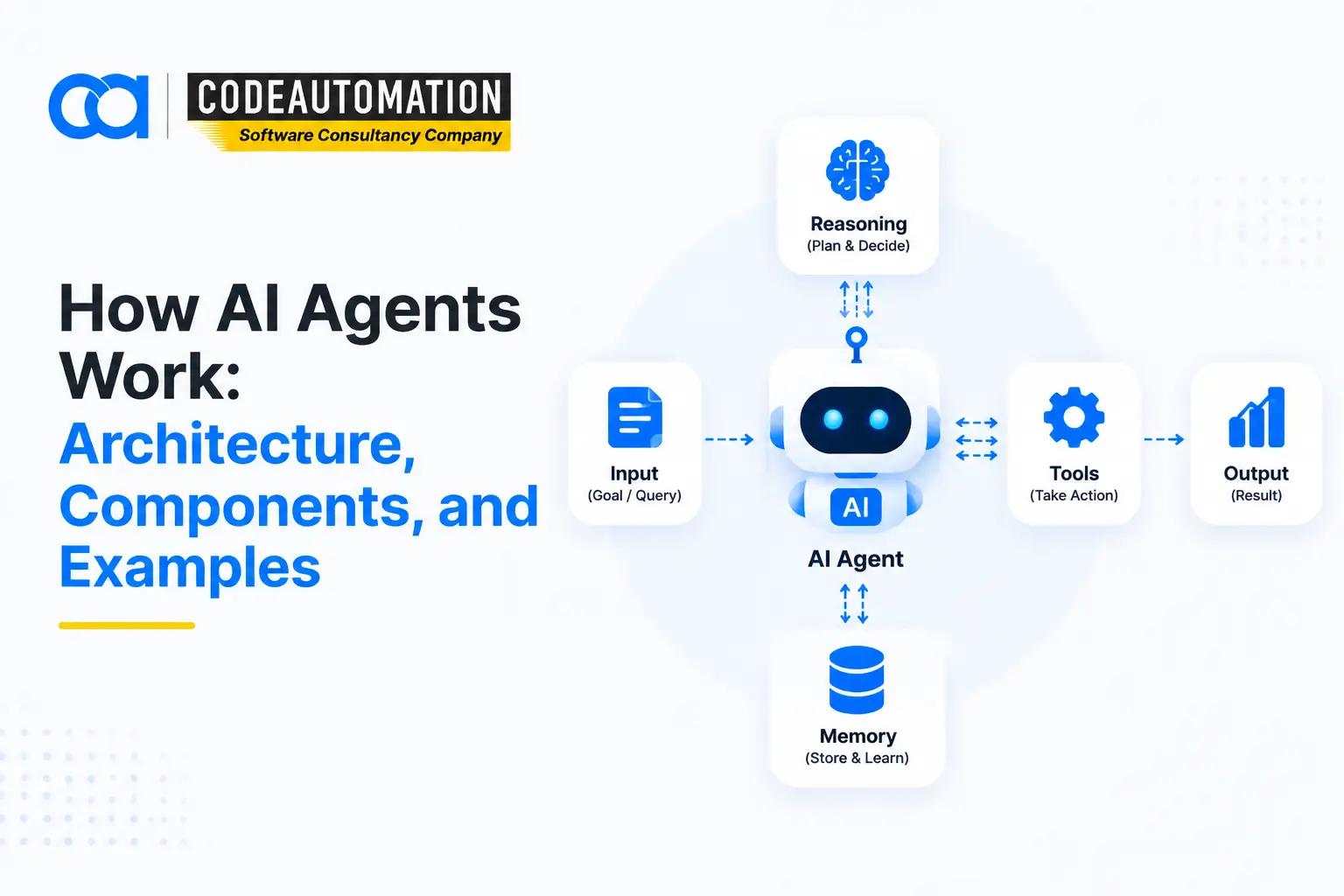
How AI Agents Work: Architecture, Components, and Examples

19/08/2026
How Much Does Custom Software Development Cost in 2026?
28/08/2026