













INTRODUCTION
About This Project
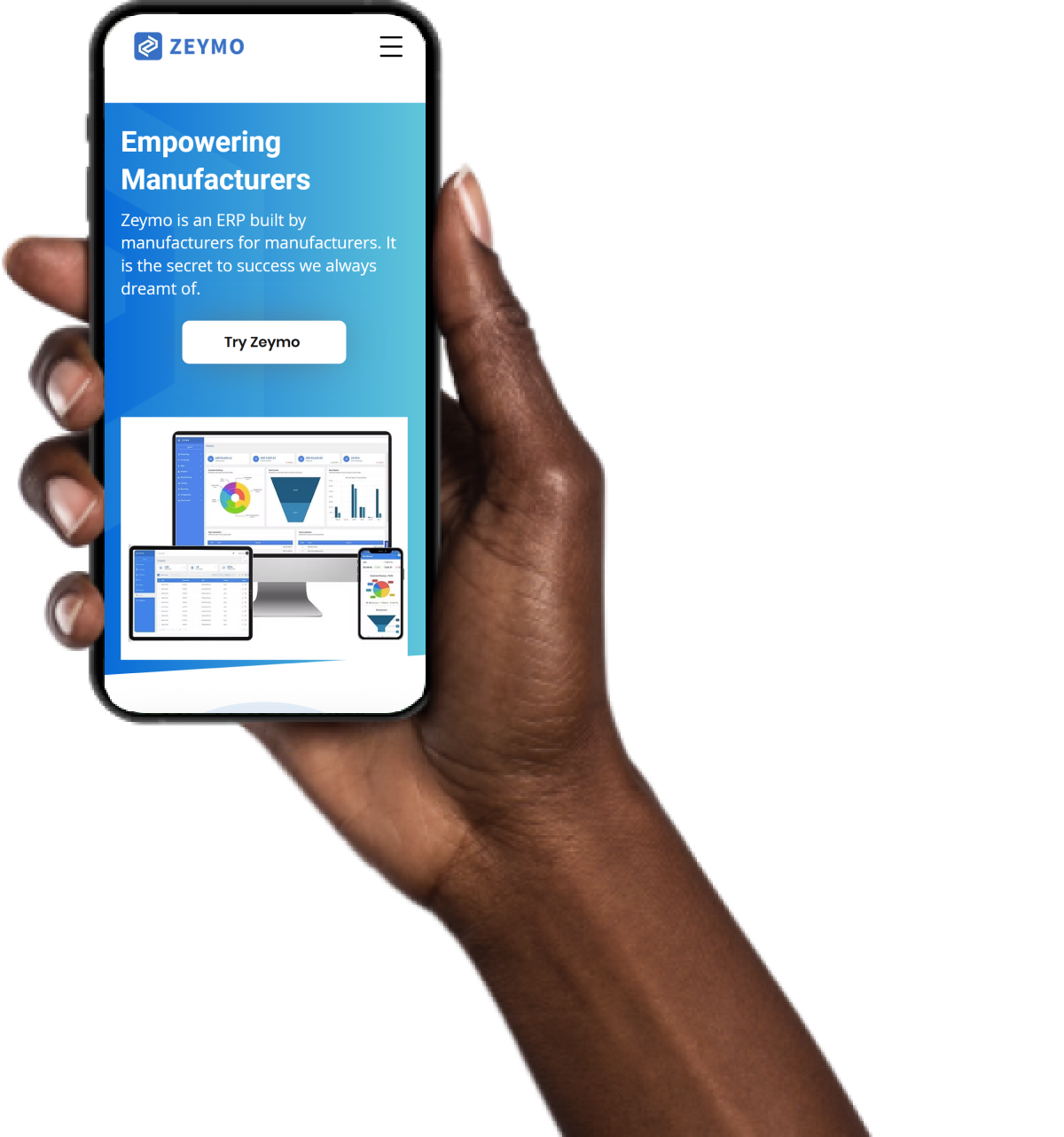
Zeymo was built to fix that. One platform, end to end: accounting, MRP, inventory, logistics, sales, and analytics all connected.
GET STARTED
Overview
Zeymo is a cloud ERP built by manufacturers, for manufacturers. We helped them push it further: new AI driven capabilities, tighter engineering, and a QA process that keeps a complex platform running without surprises.
Industry
Manufacturing ERP / SaaS
Scope
Dev · AI · QA
Visit
https://www.zeymo.com/
Project Goals

Extend Zeymo's feature set across manufacturing, logistics, and analytics modules without slowing down existing customers or creating technical debt.

Implement AI solutions that surface genuinely useful insights from manufacturing data: demand forecasting, production planning, and operational anomaly detection.

Build a QA process rigorous enough for a platform where a bug in inventory logic or production scheduling has real downstream consequences for a manufacturer's operations.
Tools & Technologies Used
Frontend
Next.js

Content Management
Sanity CMS

Project Management
Jira

SEO Monitoring
Google Search Console

Analytics & Tracking
Google Tag Manager
Hosting & Deployment
Vercel

UI/UX Design
Figma
Frontend
Next.js
Content Management
Sanity CMS
Project Management
Jira
SEO Monitoring
Google Search Console
Analytics & Tracking
Google Tag Manager
Hosting & Deployment
Vercel
UI/UX Design
Figma

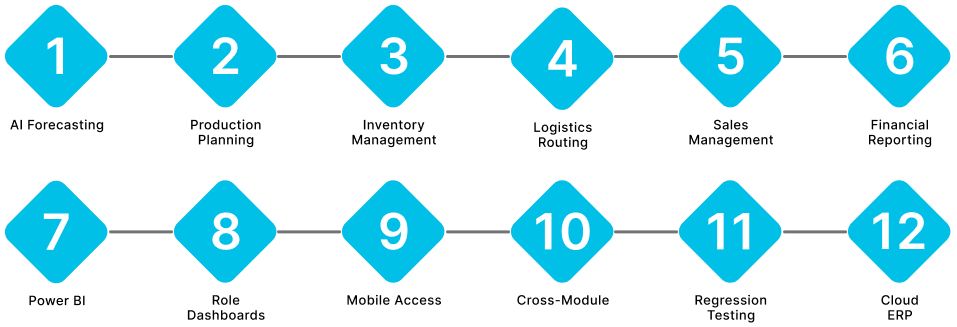
zeymo Features
Challenges Faced:
- Everything is connected to everything: In Zeymo, a change in a sales order ripples through production scheduling, inventory levels, logistics routing, and financial reporting. A fix in one module can quietly break something in another. You cannot develop in isolation.
- Manufacturers cannot afford downtime: Zeymo's clients run daily operations on the platform. Production teams pull their schedules from it. Drivers use the mobile app for route navigation. A bad release is not a minor inconvenience. It stops production lines.
- AI that actually helps on the shop floor: Generic AI features are easy to ship and useless in practice. Manufacturing data is domain specific. Demand patterns, batch constraints, bill of materials dependencies, lead time variability. The AI had to understand the manufacturing context, not just surface pretty charts.
- A broad QA surface across web and mobile: Zeymo runs across browser, iOS, and Android. Role specific dashboards for owners, managers, sales reps, drivers, and floor operators each need separate test coverage. One QA pass does not cover the platform.
Our Approach:
- Building across every module: New capabilities across Zeymo's manufacturing, inventory, logistics, and sales modules, built without breaking existing workflows. Every decision accounted for how changes ripple through the platform. No isolated fixes, no downstream surprises.
- AI built into the factory floor: Demand forecasting that reads seasonal patterns and order history. Production planning factors in machine availability and material lead times. Anomaly detection that catches irregular inventory movement before it becomes a stockout. All of it surfaces through Zeymo's Power BI integration, where management already looks.
- QA across the whole surface: Test coverage across web and mobile, every role, and the cross-module workflows where ERP bugs hide. Features pass functional, integration, and regression testing on the flows clients use daily. Nothing ships until every layer clears.
- Mobile QA for the field: For drivers on delivery routes and floor operators on the line, mobile is the primary interface, not a companion app. We ran dedicated QA passes across devices and roles, focused on logistics and inventory flows where real-time accuracy matters most.
What We Delivered:
- Cross Module Feature Development: New capabilities across manufacturing, inventory, logistics, and sales modules, built to work within Zeymo's connected data architecture.
- Manufacturing AI layer: Demand forecasting, production planning intelligence, and anomaly detection built around the real constraints of a manufacturing operation.
- Full platform QA coverage: Role based and cross module testing across web and mobile, with regression suites covering the workflows Zeymo's clients depend on daily.
- Power BI AI output layer: AI generated insights surfaced through Zeymo's existing Power BI integration so management sees actionable data where they already work.
Conclusion:
Manufacturers using Zeymo now run their entire operation from one place. Owners see P&L in real time. Production managers schedule around actual demand. Drivers follow optimized routes. Sales reps close orders from the mobile app on the floor. That is what the platform was always supposed to do. The AI layer and the development work we contributed helped it get there faster.