























What Is Agentic AI? Understanding Autonomous AI Systems in 2026
Agentic AI Explained: The Evolution of Artificial Intelligence
Published 16/ 05/ 2026
AI is rapidly changing, businesses are not only relying on AI to make predictions or generate content; they are increasingly turning to AI systems that can make decisions, take actions, and carry out tasks with minimal human intervention. This new form of AI is called agentic AI.

Ready to Automate Your Success?
From AI-powered applications to scalable software development, we help businesses automate workflows and accelerate growth.
Book a Free ConsultationAgentic AI is the ability of AI systems to take autonomous action to achieve a goal. These systems can reason, plan, act, and adapt in real-time, rather than waiting for users to give them directions. This makes them much more lively than conventional AI models.
The role of Agentic AI in helping companies adopt smarter automation and more scalable workflows is becoming more significant as they seek solutions that will meet their evolving needs. For companies aiming to adopt smarter automation and more scalable workflows, knowing how Agentic AI works is crucial.
What is Agentic AI?
Agentic AI is an AI system composed of intelligent agents that can perform tasks independently towards a clearly stated goal. These are systems that simulate some aspects of human decision-making based on the collection of information, the analysis of situations, and the determination of appropriate action to take.
Agentic AI systems can adjust to new contexts and make decisions based on the conditions of the moment, unlike other automation that relies on a set of rules.
So, if you're wondering, "What is agentic AI?" It's essentially AI that operates as a person or entity instead of a mere instrument.
What makes Agentic AI different?
Typical AI systems do not proactively anticipate and resolve issues. They are waiting for commands and executing certain tasks according to given instructions.
Agentic AI models are proactive. However, they can respond to more than one command at a time:
- Understand goals
- Divide work into steps
- Access tools and external systems.
- Make decisions
- Learn from outcomes
- Change their behaviour over time
This transformation is what propels agentic AI to its extraordinary capabilities.
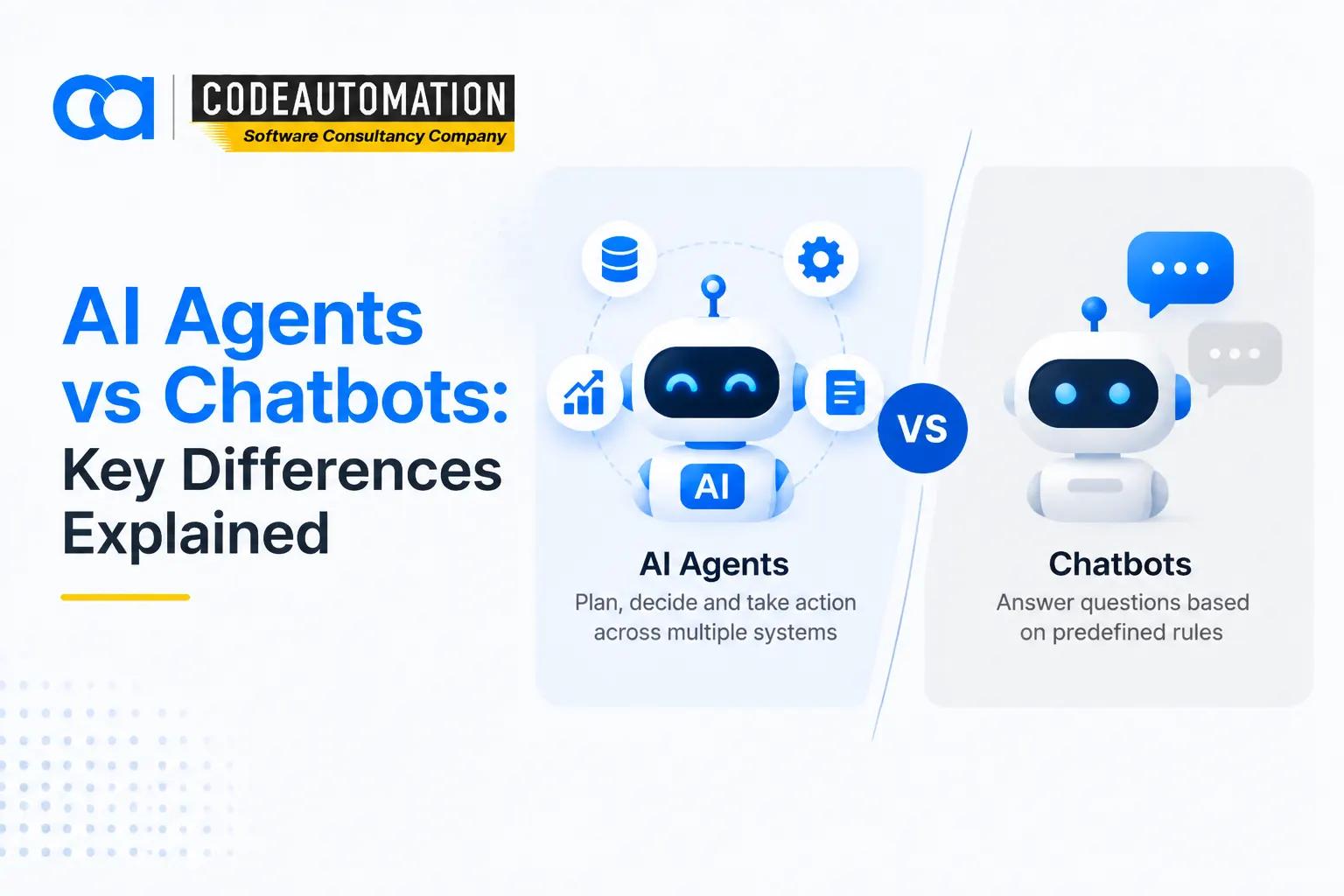
For instance, a traditional chatbot can respond to customer inquiries. An agentic AI agent could answer the question and then also automatically follow up and process refunds, schedule appointments, and access databases.
How does Agentic AI work?
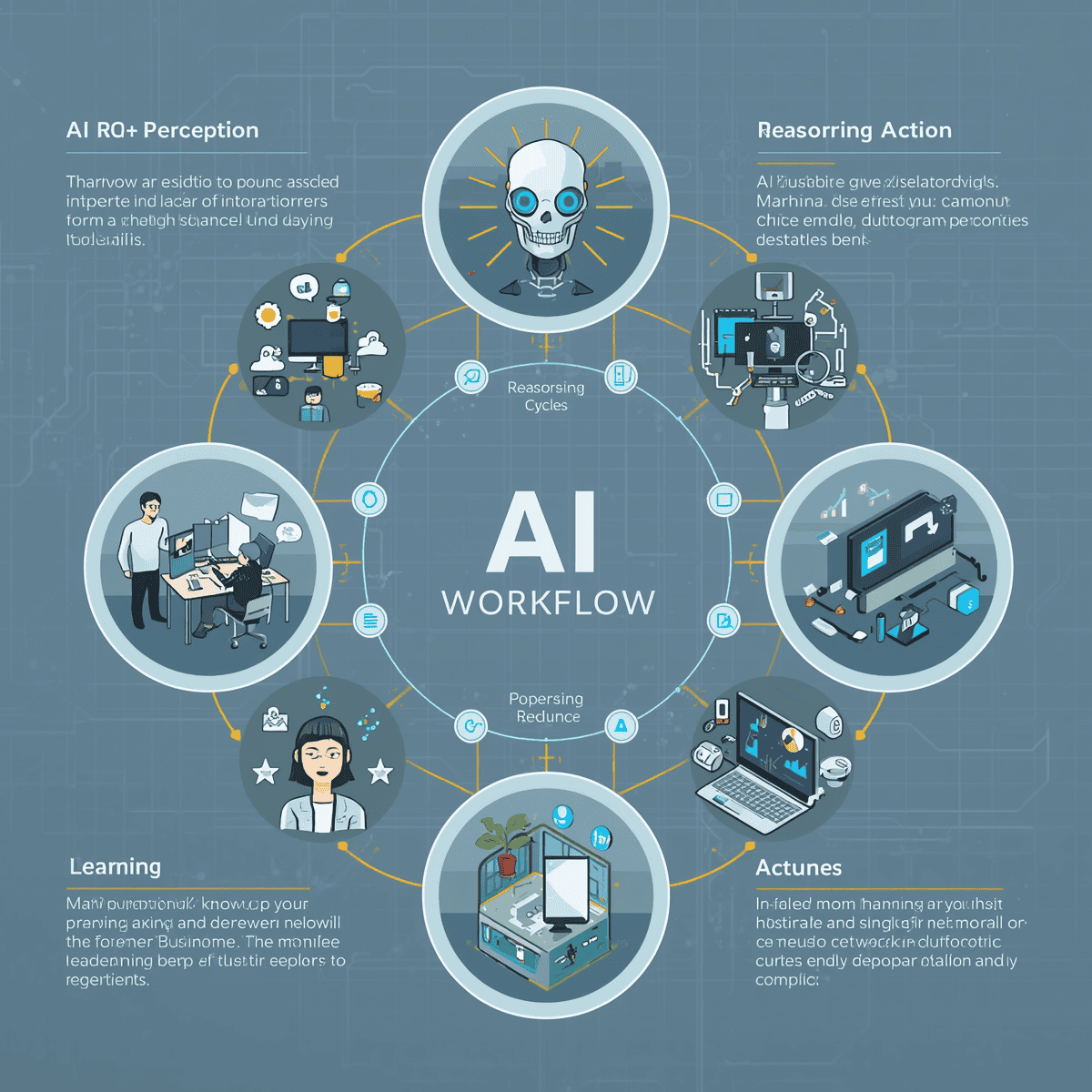
It's helpful to understand the fundamental process that agentic AI systems employ.
The typical workflow for most agentic frameworks can be broken down into four stages:
1. Perception
The AI gathers data from APIs, documents, software platforms, databases, sensors, or by interacting with people.
2. Reasoning and planning
The system considers all available information and decides on the optimum way to achieve a set objective.
3. Action
The AI performs actions with the assistance of systems, tools, or workflows.
4. Learning
This continuous process enables dynamic AI agents to function and work without requiring any human instructions one after the other.
What are Agentic LLMs?
Agentic LLM systems integrate with automation and reasoning, and rely on large language models.
Large language models are used to give contextual and communication abilities to make human-like interactions possible. However, LLM models, in isolation, primarily produce answers.
Agentic AI does this and adds
- APIs
- Memory systems
- Workflow automation
- External tools
- Decision engines
This enables AI agents to think and act.
In many instances, businesses are now turning to AI agent frameworks, which integrate generative AI with operational automation to create more intelligent systems.
Agentic AI applications
Agentic AI applications are thrilling to businesses because the technology is applicable in numerous industries.
Customer support
AI agents can automatically handle tickets, retrieve customer information, handle requests, and escalate problems.
Healthcare
Agentic AI is employed in healthcare to track patient information, aid in diagnosis, and offer on-the-spot treatment advice.
Finance
AI-driven trading systems are designed to analyze the market and make trades based on market fluctuations.
Supply chain and logistics
Agentic systems optimise routes, monitor stock levels, and automatically respond to any disruption.
Autonomous vehicles
One of the most obvious examples of agentic AI automation is in the field of autonomous vehicles, where AI systems continuously process and react to data from various sensors to make decisions on the fly.
For those seeking an example of an agentic AI, vehicles that drive themselves and customer support systems using artificial intelligence are prime real-life applications today.
Agentic AI vs Generative AI
Many people mix up generative AI and agentic AI, but they are two distinct AIs.
- Predictive AI is predictive.
- Generative AI makes content.
- Agentic AI independently takes action.
enerative AI tools are chatbots, can write emails and create text. An agentic platform, on the contrary, can create the email, send it, monitor replies, arrange meetings, and update the CRM system automatically.
This is a transition from generation to execution, which is what makes many experts consider agentic AI as the next big step in the evolution of AI.
Why businesses are investing in Agentic AI
Businesses are adopting agentic AI platforms because of their ability to enhance efficiency and simplify operations.
Key benefits include:
- Faster workflows
- Reduced manual work
- Real-time decision-making
- Better scalability
- Smarter automation
- Improved customer experiences
With the ongoing advancements in AI, there is a growing interest in the implementation of General-Purpose AI agents that several businesses across different niches are adopting.
Other companies are also developing agentic operating systems and workflow automation tools that enable AI agents to orchestrate across the entire business environment
Challenges of Agentic AI
Agentic AI comes with significant challenges, however.
Security and oversight
It is important to have robust monitoring and measures in place on all autonomous systems to avoid unwanted activities.
Data quality
Data accuracy is crucial for AI agents. Without good information, there will be poor decisions.
Ethical concerns
With the increasing autonomy of AI systems, there are growing concerns regarding accountability and transparency.
System integration
Deployments need to be done carefully to ensure reliability and control of the deployment.
The future of Agentic AI

AI is becoming more and more agentic in the future.
With the advancement of agentic AI tools, there will likely be more and more AI agents managing larger parts of the business independently. These systems will be more collaborative, flexible, and will be able to process more complex workflows.
Many large companies, such as the ones developing Anthropic agentic AI and other advanced AI systems, are betting big in this area.
As AI technology evolves, agentic AI platforms can become an integral part of the corporate landscape, assisting businesses in automating not only tasks but also decision-making.
Conclusion
So, agentic AI is basically the next evolution of artificial intelligence. In this, systems can reason, act, adapt, and pursue goals with minimal human supervision.
Unlike traditional AI that simply responds to instructions, agentic AI systems actively make decisions and complete tasks in real time. By combining automation, large language models, reasoning, and external tools, these systems move AI from passive assistance to autonomous action.
As businesses continue exploring smarter workflows and scalable automation, agentic AI is quickly becoming one of the most important technologies shaping the future of work.
FAQs
Everything you need to know about our products and services
Agentic AI refers to AI systems that can independently make decisions and complete tasks with minimal human supervision.
Traditional AI mainly responds to prompts, while agentic AI can plan, reason, take action, and adapt autonomously.
Agentic AI agents are intelligent software systems designed to pursue goals, interact with tools, and execute workflows independently.
Agentic AI works through a continuous loop of perception, reasoning, action, and learning to achieve specific objectives.





Adnan Ghaffar is the visionary CEO of CodeAutomation.ai, a platform dedicated to transforming how businesses build software through cutting-edge automation. With over a decade of experience in software development, QA automation, and team leadership, Adnan has built a reputation for delivering scalable, intelligent, and high-performance solutions.
Under his leadership, CodeAutomation.ai has grown into a trusted name in AI-driven development, empowering startups and enterprises alike to streamline workflows, accelerate time-to-market, and maintain top-tier product quality. Adnan is passionate about innovation, process improvement, and building products that truly solve real-world problems.
More Articles

03/ 23/ 2026
CMS development services: How to manage content efficiently
02/09/2026
AI Automation Company vs Software Agency: Which Is Right for You?
19/08/2026
How Much Does Custom Software Development Cost in 2026?
29/09/2026
AI Agents vs Chatbots: Key Differences Explained

02/ 02/ 2026
RevOps and Marketing Ops Workflow Automation for Scalable Business Growth

25/ 04/ 2026