





















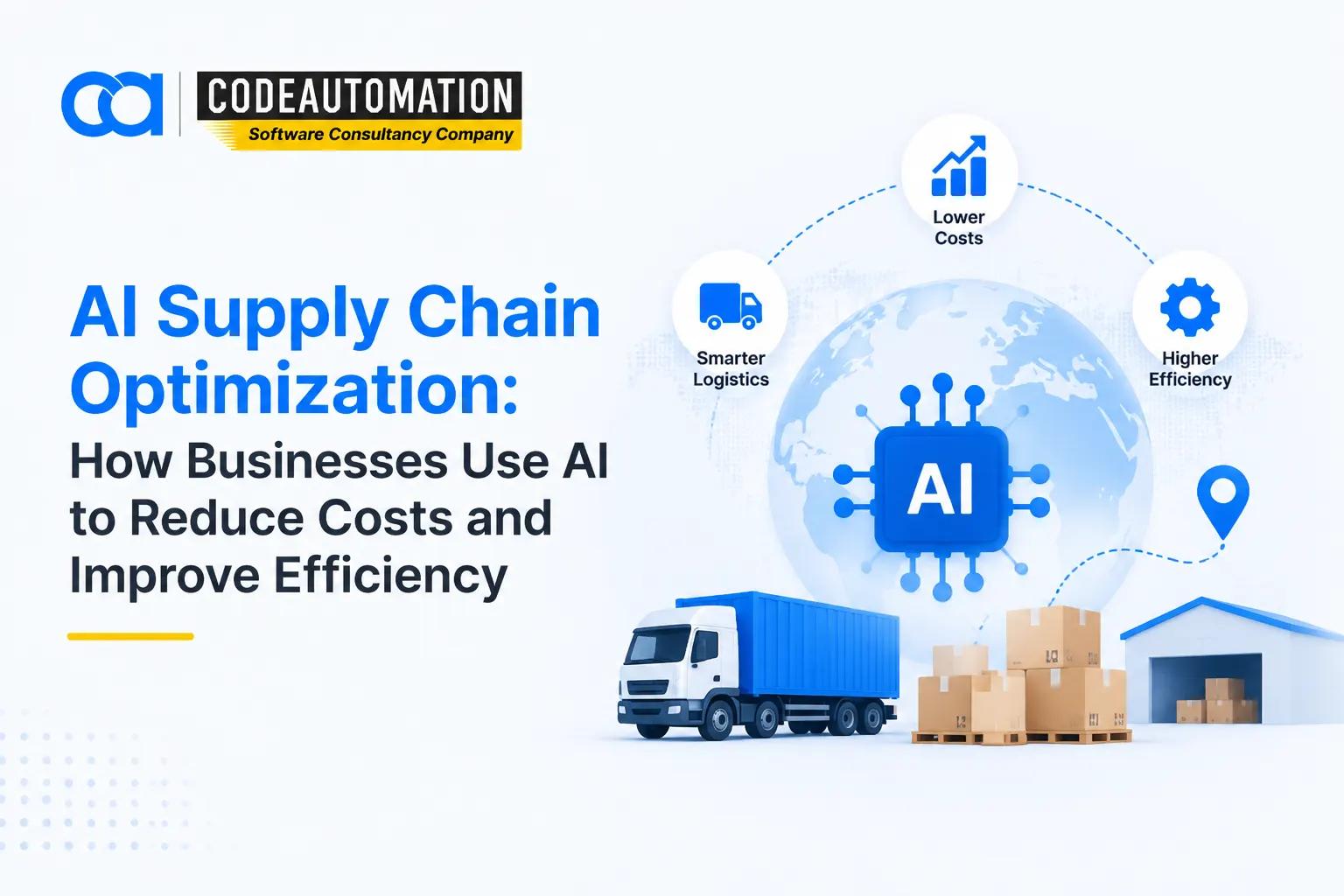
AI Supply Chain Optimization How Businesses Use AI to Reduce Costs and Improve Efficiency
Published 15/09/2026
Supply chains have become more complex than ever. Businesses must manage changing customer demand, supplier risks, inventory challenges, transportation delays, and increasing operational costs. Traditional supply chain systems often depend on historical reports and manual decision-making. While these methods worked in the past, modern businesses need faster and more accurate ways to predict problems and optimize operations.

Ready to Automate Your Success?
From AI-powered applications to scalable software development, we help businesses automate workflows and accelerate growth.
Book a Free ConsultationSupply chains have become more complex than ever. Businesses must manage changing customer demand, supplier risks, inventory challenges, transportation delays, and increasing operational costs.
Traditional supply chain systems often depend on historical reports and manual decision-making. While these methods worked in the past, modern businesses need faster and more accurate ways to predict problems and optimize operations.
AI supply chain optimization helps organizations transform their operations by using artificial intelligence, machine learning, automation, and real-time data analysis to make smarter decisions.
From demand forecasting and inventory management to logistics automation and supplier monitoring, AI enables businesses to build faster, more efficient, and more resilient supply chains.
What Is AI Supply Chain Optimization?
AI supply chain optimization is the use of artificial intelligence technologies to improve supply chain planning, execution, and decision-making.
AI systems analyze large amounts of data from different sources, including:
- Customer demand patterns
- Inventory levels
- Supplier performance
- Transportation data
- Market trends
- Historical sales information
Using this information, AI can identify patterns, predict future outcomes, recommend actions, and automate repetitive processes.
Unlike traditional systems that react after problems occur, AI-powered supply chains can proactively identify risks and recommend solutions before disruptions impact business operations.
Why Businesses Are Adopting AI for Supply Chain Management
Modern supply chains face several challenges:
- Unpredictable demand
- Supplier disruptions
- Rising logistics costs
- Excess inventory
- Stock shortages
- Limited operational visibility
AI helps businesses overcome these challenges by improving accuracy, speed, and automation.
Key benefits include:
Improved Demand Forecasting
Demand forecasting is one of the most important parts of supply chain management.
Traditional forecasting methods rely heavily on historical sales data. AI improves forecasting by analyzing multiple data points simultaneously.
AI can evaluate:
- Customer buying behavior
- Seasonal trends
- Market changes
- Economic signals
- External factors
This allows companies to predict demand more accurately and maintain the right inventory levels.
Smarter Inventory Management
Inventory problems can create significant costs.
Too much inventory increases storage expenses, while insufficient inventory creates missed sales opportunities.
AI-powered inventory optimization helps businesses:
- Predict inventory requirements
- Reduce excess stock
- Prevent stockouts
- Improve warehouse efficiency
By continuously analyzing inventory movement, AI systems can recommend when products should be reordered and how much stock should be maintained.
AI-Powered Logistics Optimization
Transportation is one of the largest costs in supply chain operations.
AI can optimize logistics by analyzing:
- Delivery routes
- Traffic conditions
- Fuel costs
- Shipment schedules
- Carrier performance
AI-powered logistics systems can recommend better routes, reduce delivery times, and improve transportation efficiency.
Supply Chain Visibility Through Real-Time Data
Many businesses struggle because supply chain data exists across disconnected systems.
Information may be stored in:
- ERP platforms
- Warehouse systems
- CRM software
- Supplier databases
- Logistics platforms
AI solutions connect these data sources and create a unified operational view.
This allows businesses to monitor:
- Supplier performance
- Shipment status
- Inventory movement
- Operational bottlenecks
Better visibility enables faster and more informed decisions.
AI Agents for Supply Chain Automation
The next evolution of supply chain automation is AI agents.
AI agents can perform tasks independently by analyzing information, making recommendations, and executing workflows.
Examples include:
Supplier Management Agents
AI agents can monitor supplier performance, identify risks, and notify teams about potential disruptions.
Procurement Agents
AI agents can analyze purchasing patterns, compare suppliers, and automate procurement workflows.
Logistics Agents
AI agents can monitor shipments, detect delays, and suggest alternative routes.
Reporting Agents
AI agents can automatically generate supply chain reports and provide business insights.
This reduces manual effort and allows teams to focus on strategic activities.
How AI Improves Different Supply Chain Areas
Manufacturing
AI helps manufacturers improve:
- Production planning
- Predictive maintenance
- Quality inspection
- Resource allocation
AI can identify equipment problems before failures occur and reduce unexpected downtime.
Retail
Retail companies use AI for:
- Demand prediction
- Inventory optimization
- Personalized customer experiences
- Automated replenishment
Logistics Companies
AI helps logistics providers:
- Optimize routes
- Track shipments
- Improve delivery accuracy
- Reduce operational costs
Healthcare Supply Chains
Healthcare organizations use AI to improve:
- Medical inventory management
- Supplier reliability
- Demand prediction
- Distribution planning
AI Supply Chain Optimization Implementation Process
Implementing AI successfully requires more than selecting a tool.
A typical AI supply chain implementation includes:
1. Identify Business Challenges
Companies should first define the problems they want AI to solve.
Examples:
- Reducing inventory costs
- Improving forecasting accuracy
- Automating manual processes
2. Integrate Data Sources
AI requires reliable data.
Businesses need to connect:
- ERP systems
- CRM platforms
- Inventory databases
- Supplier systems
3. Develop AI Models and Workflows
AI solutions are customized based on business requirements.
This may include:
- Machine learning models
- AI agents
- Automation workflows
- Analytics dashboards
4. Monitor and Improve
AI systems continuously improve through new data and feedback.
Businesses should monitor:
- Accuracy
- Cost savings
- Process improvements
- User adoption
Challenges of Implementing AI in Supply Chain
Although AI provides major advantages, businesses should consider several challenges.
Data Quality Issues
Poor-quality data can reduce AI accuracy.
Companies need clean, structured, and connected data sources.
Integration Complexity
AI solutions often need integration with existing business systems.
Without proper architecture, businesses may struggle to scale AI adoption.
Security and Governance
Supply chain data often contains sensitive business information.
Companies need proper security controls, access management, and governance policies.
Employee Adoption
AI should support employees rather than replace decision-making completely.
Successful adoption requires training and change management.
Build Custom AI Supply Chain Solutions With CodeAutomation
Every supply chain operates differently.
Off-the-shelf tools may solve general problems, but businesses often require customized AI solutions based on their workflows, systems, and industry requirements.
CodeAutomation helps businesses develop AI-powered solutions including:
- AI workflow automation
- AI agents
- Data analytics solutions
- Enterprise software integrations
- Custom AI applications
Our team helps organizations identify automation opportunities, connect existing systems, and build scalable AI solutions that improve operational efficiency.
Frequently Asked Questions (FAQs)
Everything you need to know about our products and services
AI supply chain optimization uses artificial intelligence to analyze supply chain data, predict future outcomes, automate processes, and improve operational decisions.
AI reduces costs by improving demand forecasting, optimizing inventory levels, reducing transportation inefficiencies, and automating manual workflows.
Examples include AI demand forecasting, automated procurement, predictive maintenance, route optimization, inventory management, and AI-powered supply chain assistants.
Yes. AI solutions can integrate with ERP platforms, CRM systems, warehouse management systems, and other business applications through APIs and data integrations.
The cost depends on project complexity, integrations, AI models, automation requirements, and customization. Small automation projects may require less investment, while enterprise AI platforms require larger implementation budgets.





Adnan Ghaffar is the visionary CEO of CodeAutomation.ai, a platform dedicated to transforming how businesses build software through cutting-edge automation. With over a decade of experience in software development, QA automation, and team leadership, Adnan has built a reputation for delivering scalable, intelligent, and high-performance solutions.
Under his leadership, CodeAutomation.ai has grown into a trusted name in AI-driven development, empowering startups and enterprises alike to streamline workflows, accelerate time-to-market, and maintain top-tier product quality. Adnan is passionate about innovation, process improvement, and building products that truly solve real-world problems.
More Articles
03/09/2026
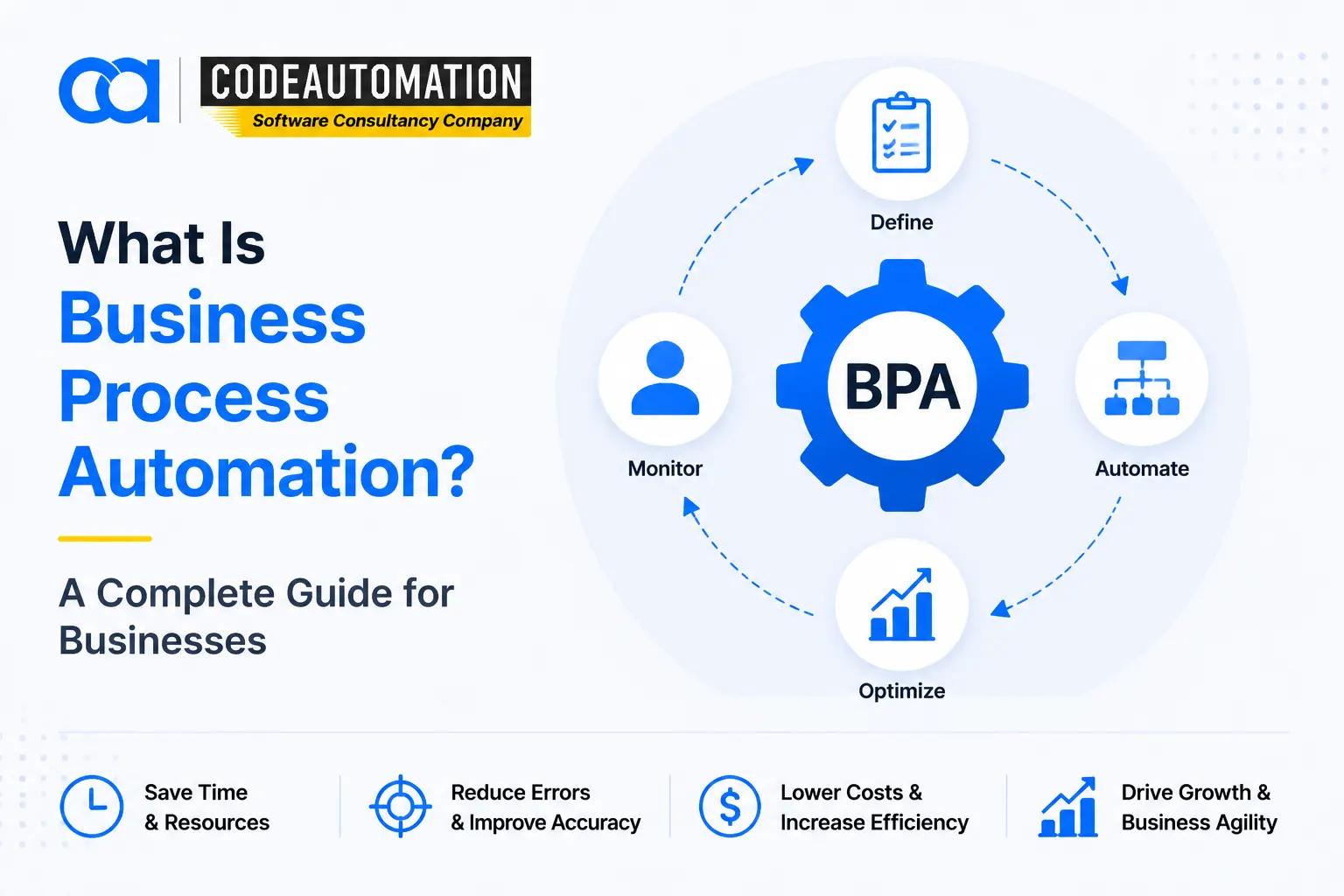
What Is Business Process Automation? A Complete Guide for Businesses
04/09/2026
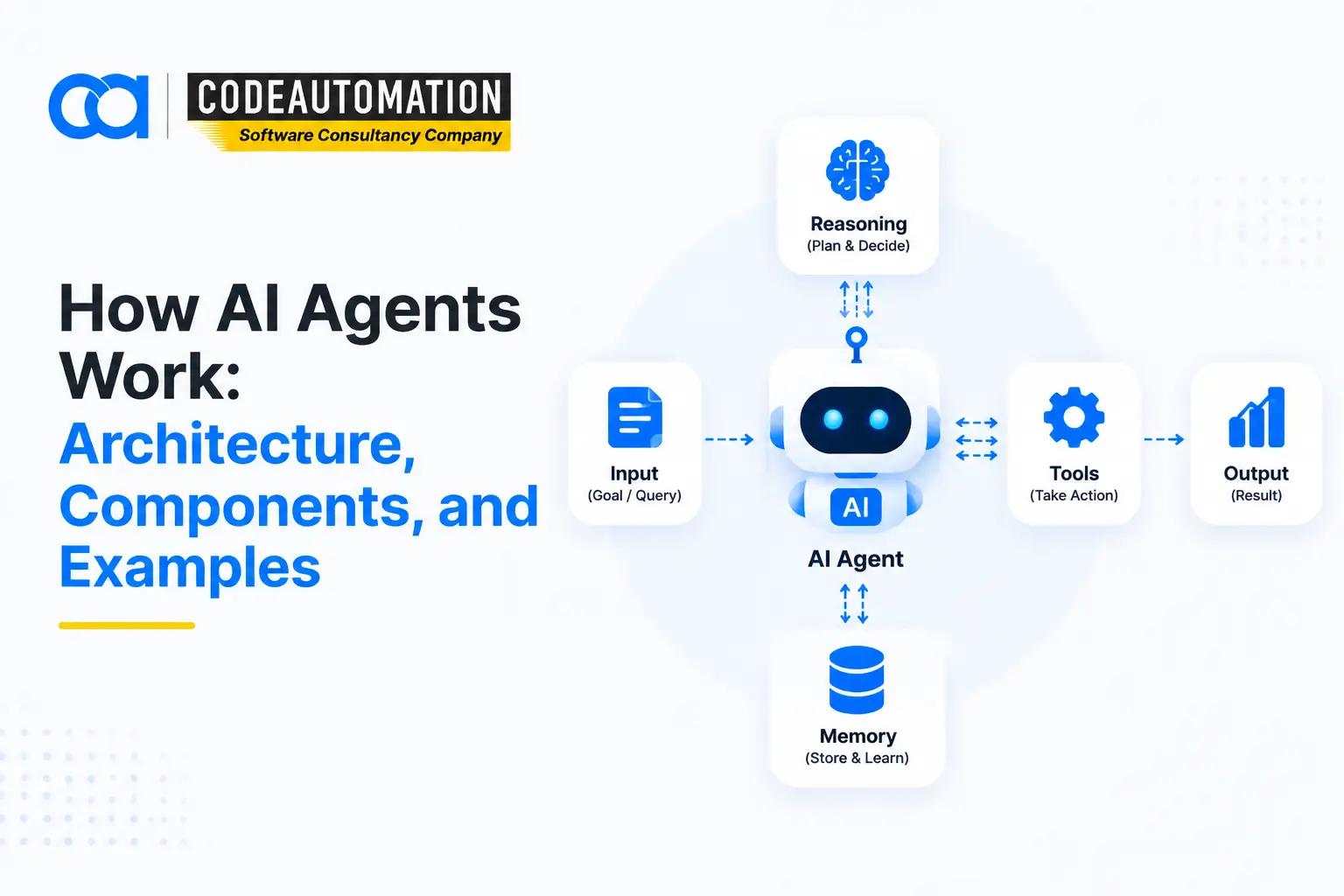
How AI Agents Work: Architecture, Components, and Examples
08/09/2026
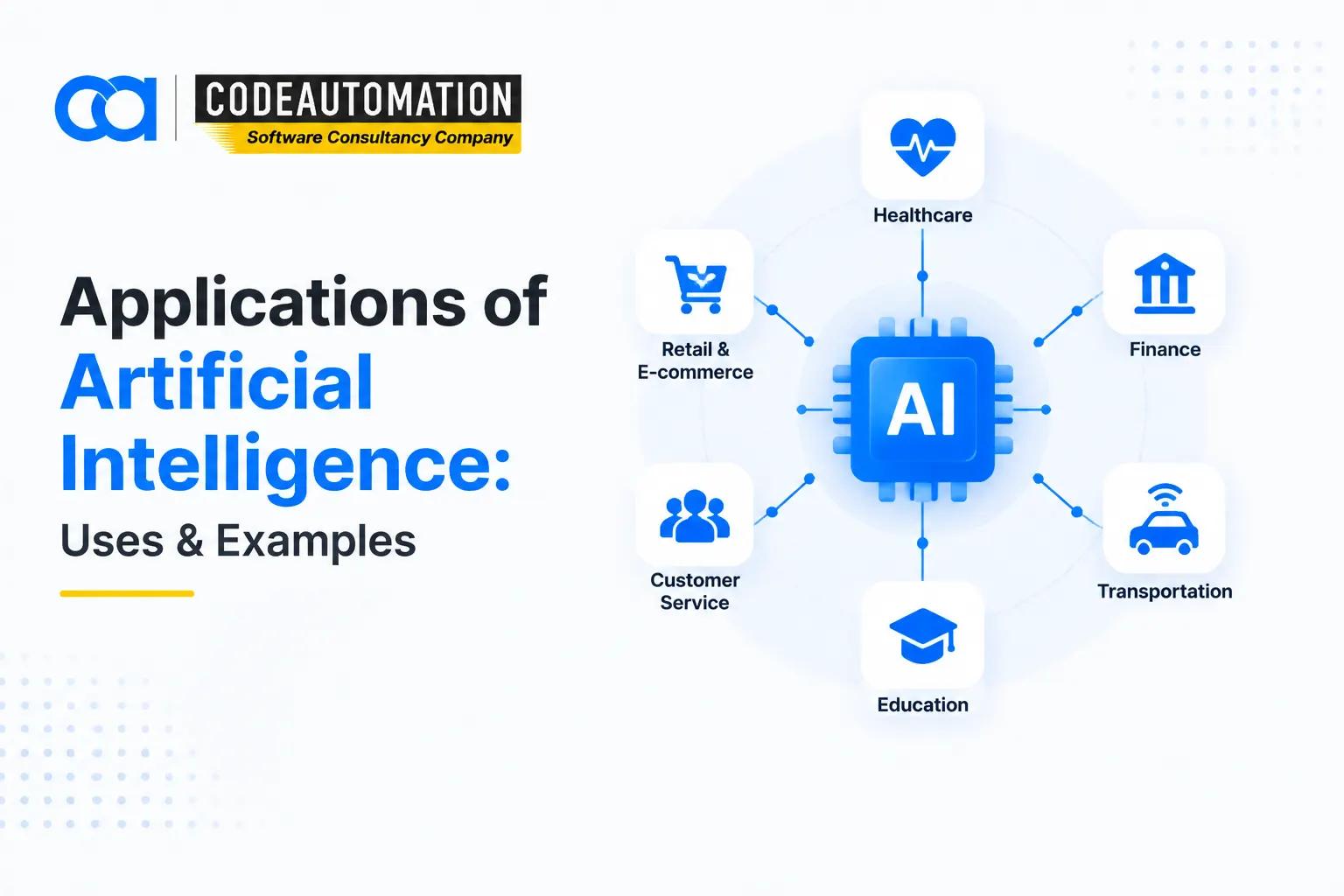
Applications of Artificial Intelligence: Uses, Examples, and Business Impact
03/ 09/ 2026
The Future of AI Automation in Modern Businesses in 2026
19/08/2026
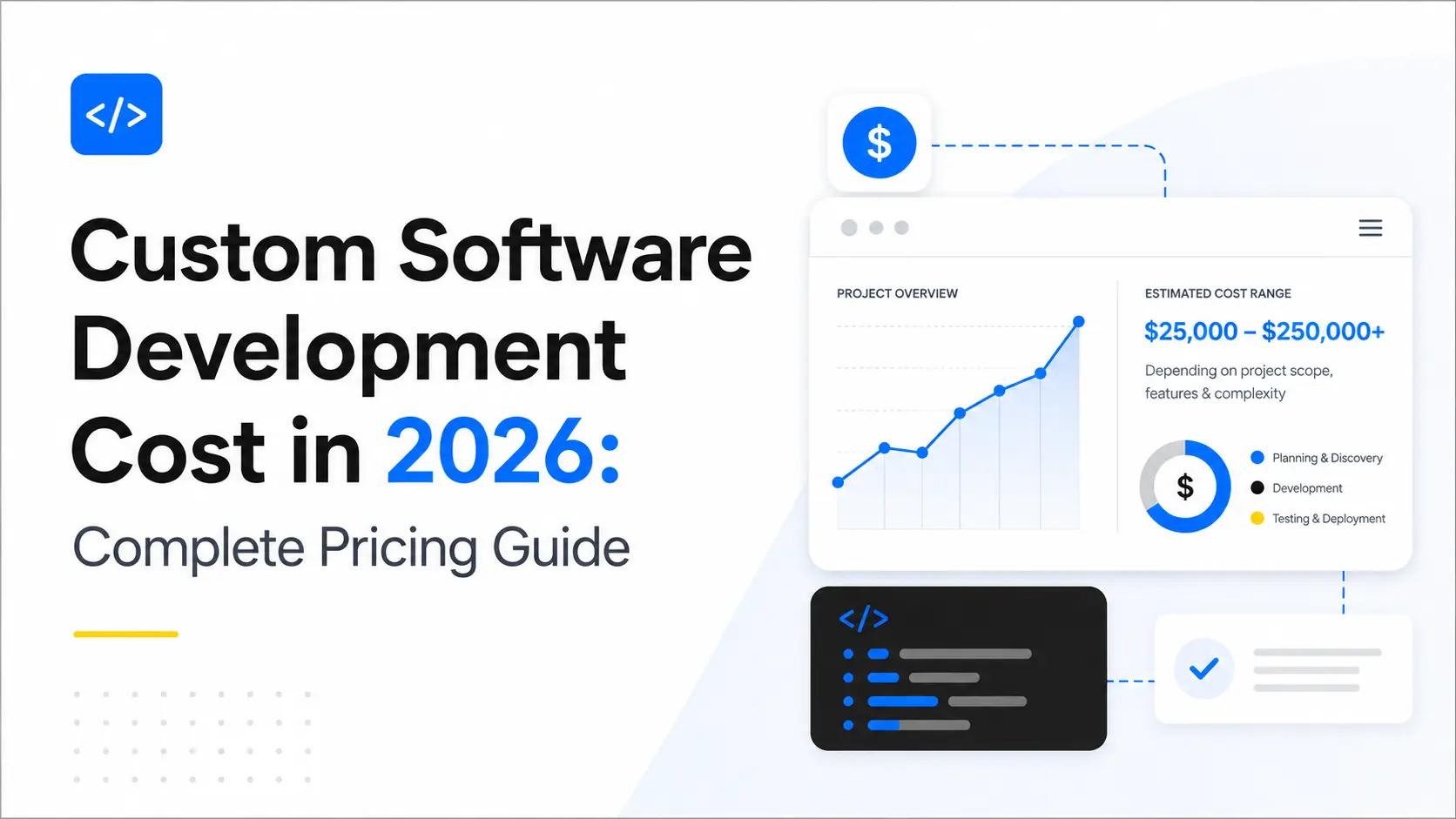
How Much Does Custom Software Development Cost in 2026?

18 April 2025