
























Enterprise software solutions: Key benefits and implementation guide
How Enterprise Software Drives Business Efficiency
Published 03/ 19/ 2026
With the expansion of the business, its operation process is bound to be complicated. Creating more complex teams, dealing with larger amounts of data within departments, and initiating workflows that involve multiple systems. At a certain stage, most simple software tools cannot be used to handle all things effectively. Enterprise software solutions come in at this point.

Ready to Automate Your Success?
From AI-powered applications to scalable software development, we help businesses automate workflows and accelerate growth.
Book a Free ConsultationEnterprise programs are meant to facilitate mass business activities. These systems interlink various functions within the organization as opposed to having individual tasks. Enterprise software can assist businesses in managing their customer data and financial reports, automating workflows, and enhancing collaboration, among others, putting the businesses in an organized and scalable manner.
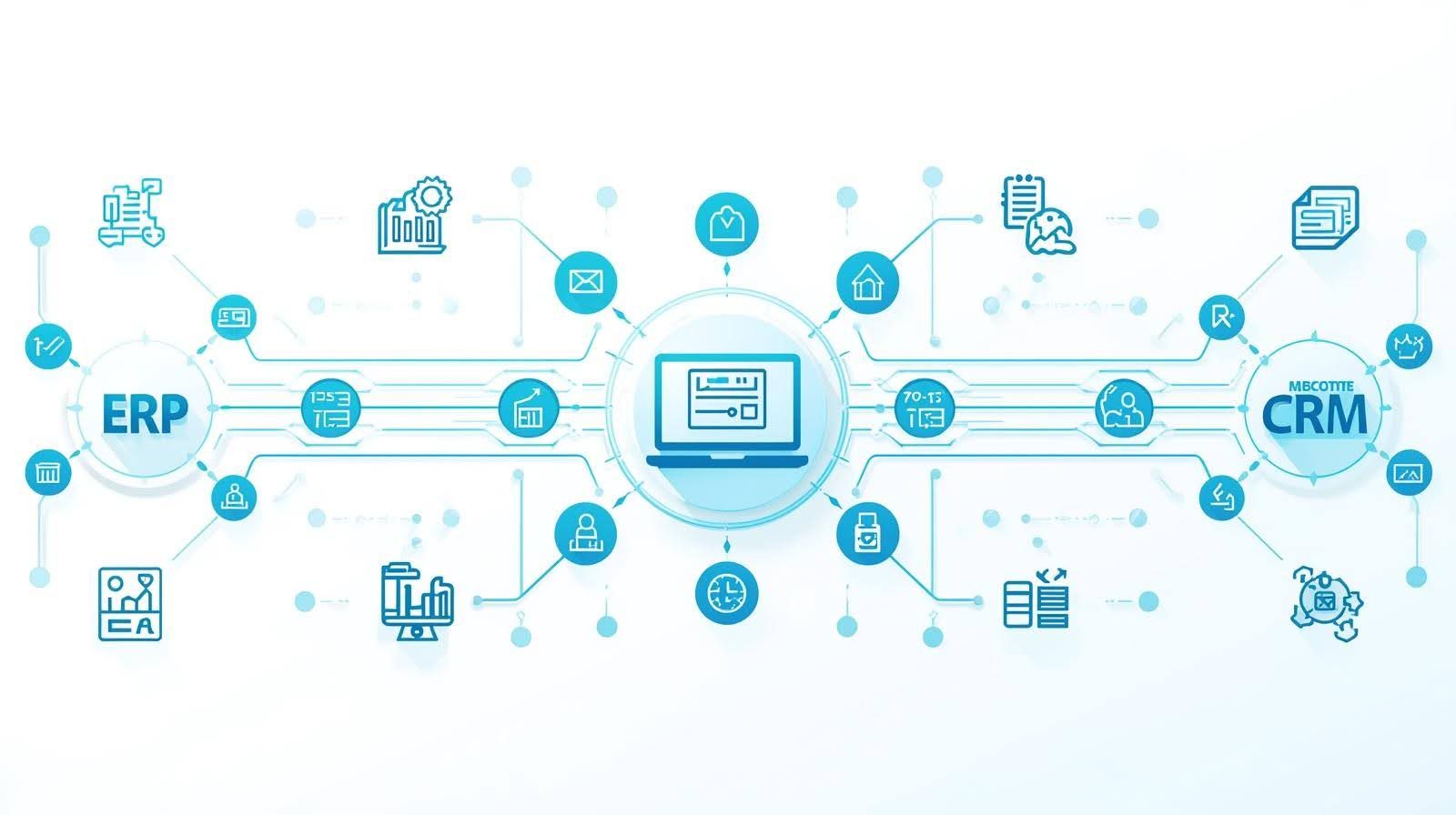
Enterprise technology is an important aspect of companies operating in different industries today since it helps simplify processes and make superior decisions with the help of data.
What are enterprise software solutions?
Enterprise software solutions are massive software applications that are designed to aid in the operations of a firm. These systems also have multiple departments and teams, unlike single-user tools.
Enterprise applications combine most of the business functions on a single platform. As an example, a company may integrate finance, human resources, supply chain management, and customer relationship management in one system by using enterprise software.
The integration will give employees access to the same information and enable them to work more effectively within the various departments. Rather than the ability to alternate between various tools that are unrelated, teams can use a single environment that ensures that data is stored and can be accessed.
Enterprise systems are also used by many organizations to automate repetitive tasks, manage large volumes of data, and monitor business performance in real time.
Why businesses invest in enterprise applications
Enterprise software is crucial since it allows companies to deal with complexity as they expand. When companies use different tools in individual departments, the data is dispersed, and communication processes are reduced. Enterprise applications address this issue by unifying all of this.
Enhanced visibility is one of its advantages. Managers are able to access performance data, financial reports, and operational measures on one dashboard. This simplifies the process of knowing the performance of various components of the business.
The other significant benefit is efficiency. Enterprise applications automate most of the regular activities, like the generation of reports, workflow approvals, and data processing. This minimizes the number of people working manually and enables employees to concentrate on the more valuable activities.
Collaboration is also enhanced by the use of enterprise software. By having teams on a common platform, they are able to have access to the same information and coordinate their tasks.
In the case of expanding companies, these advancements can have a huge impact on productivity.
The importance of scalable software
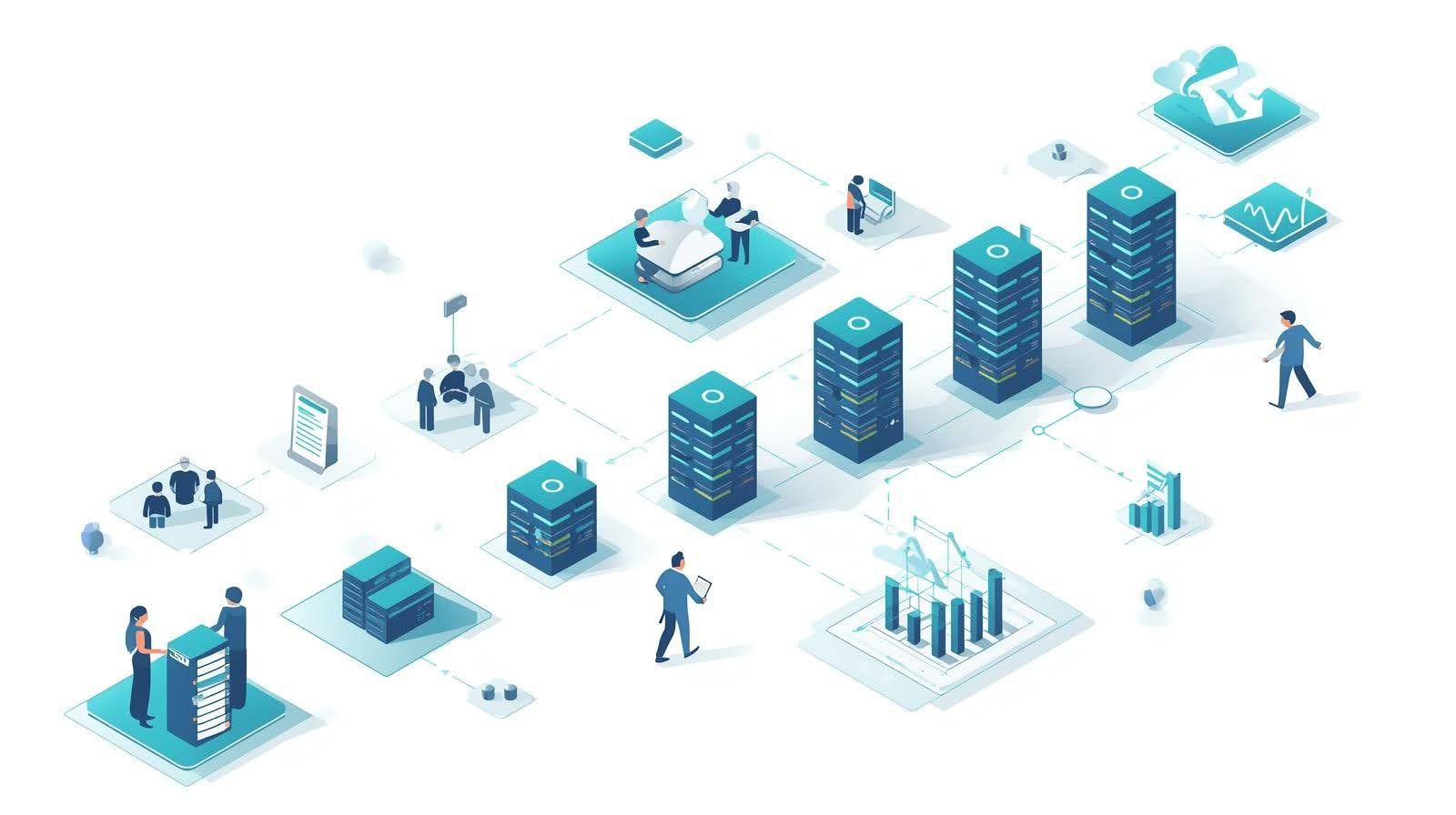
Enterprise solutions are one of the largest reasons why businesses implement growth. As organizations grow, their software has to be capable of serving additional users, additional data volumes, and additional complicated workflows.
Here is where scalable software is vital.
Scalable systems will be set up to expand with the business. They can support more users, combine with other tools, and handle growing loads of data without decreased performance.
To illustrate, when a company is entering new markets, it might have to manage more customer data, new business operations, and new reporting needs. Scalable software enables the organization to grow to accommodate its needs without necessarily changing its entire technology infrastructure.
Current enterprise platforms tend to rely on cloud-based architecture in order to ensure scalability. Cloud computing enables companies to expand the computing capacity when it is required and also makes the system stable even when they experience sudden expansion.
Types of business software systems
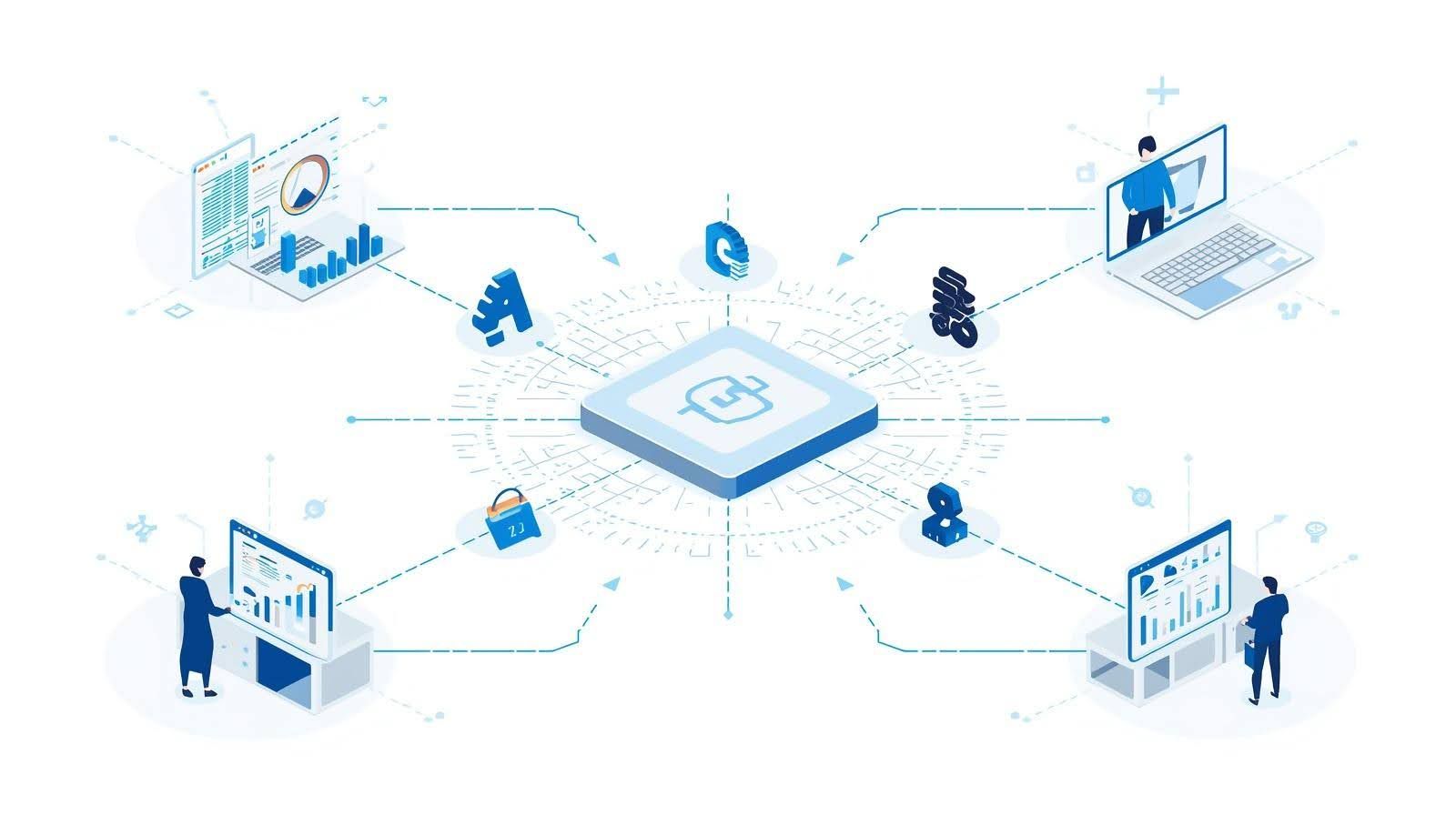
There are a number of business software systems, which enterprise technology comprises, and each of them is meant to assist certain organizational activities.
Enterprise Resource Planning systems are used in the management of internal processes like finance, procurement, and inventory. Such platforms consolidate operational information and make sure that the departments operate with correct information.
Customer Relationship Management systems are aimed at the control of customer relations and sales. They assist companies in following up on leads and overseeing the communication with customers, and enhance the overall customer experience.
The HRM systems assist in the processes of payroll, recruitment, and performance management in relation to the employees.
The data analytics platforms are also significant within the enterprise settings. These are tools that process big data and offer insights to organizations in order to make informed decisions.
A large number of firms integrate these systems into one integrated enterprise platform.
How to implement enterprise software successfully
The introduction of enterprise software is a well-planned and coordinated effort. Since these systems cut across various departments, organizations have to be systematic in implementation.
The initial one is that of identifying business goals. Companies should be aware of what issues they are interested in the software to address. This may involve better data management, automation or greater transparency in operations.
Then there is system design and customization. The software is configured by development teams to support the processes of the organization, and it is also integrated with existing tools.
Another very important step is training. The employees will have to learn how to make the new platform helpful. Training and documentation can be used to make the transition as smooth as possible.
Lastly, once the systems are deployed, the businesses should keep track of performance. Constant assessment enables the organizations to know what to improve and modify the software as their demands change.
The future of enterprise software
Enterprise technology is an ever-changing aspect as the number of new digital tools grows. Nowadays, artificial intelligence, automation tools, and sophisticated analytics are incorporated into modern platforms to make businesses more efficient.
Artificial intelligence capabilities are able to process business data, forecast trends, and can be used to automate the process of decision-making. Complex workflows that used to be handled manually can be automated to ensure efficiency in the workflow.
Cloud is also doing its part in increasing the capabilities of enterprise platforms as it offers more flexibility and scalability.
The innovations are also changing the way organizations carry out operations and compete within their various industries.
Final thoughts
The scale of the operations to be handled needs robust technology. Enterprise software solutions are the solutions that give businesses the means to structure data, optimize the workflow, and achieve long-term expansion.
Using modern enterprise applications, organizations will be able to link departments, enhance teamwork, and extract useful insights from their data. Using scalable software and integrated business software systems, businesses have the ability to create digital environments and adjust to their changing needs.
Enterprise software is one of the moves that can be made by a business to be more efficient and competitive in a world that is becoming progressively more digital, as it helps the business to maintain stability and grow at the same time.
Frequently Asked Questions (FAQs)
Everything you need to know about our products and services
Enterprise software, including ERP systems, centralizes business processes such as finance, HR, inventory, and operations into a single platform. This improves data accuracy, streamlines workflows, and supports better decision-making.
Enterprise automation reduces manual tasks by automating repetitive workflows, improving process consistency, minimizing errors, and increasing productivity. It also enables employees to focus on higher-value business activities.
Enterprise software is commonly used to manage core business functions, including finance, human resources, customer relationship management (CRM), supply chain management, inventory, procurement, and business analytics.
Enterprise software improves efficiency, collaboration, data visibility, and scalability across an organization. However, implementation may require significant planning, integration, employee training, and ongoing maintenance.
CodeAutomation develops custom enterprise software tailored to business requirements. Its solutions integrate with existing systems, automate workflows, and support scalable digital transformation to improve operational efficiency and business performance.





Adnan Ghaffar is the visionary CEO of CodeAutomation.ai, a platform dedicated to transforming how businesses build software through cutting-edge automation. With over a decade of experience in software development, QA automation, and team leadership, Adnan has built a reputation for delivering scalable, intelligent, and high-performance solutions.
Under his leadership, CodeAutomation.ai has grown into a trusted name in AI-driven development, empowering startups and enterprises alike to streamline workflows, accelerate time-to-market, and maintain top-tier product quality. Adnan is passionate about innovation, process improvement, and building products that truly solve real-world problems.
More Articles

03/ 19/ 2026
How to choose the right software development company in 2026

30/ 04/ 2026
Autonomous task-oriented AI agents: Redefining workflow execution in 2026
03/ 09/ 2026
The Future of AI Automation in Modern Businesses in 2026

03/ 05/ 2026
AI Agent for Operations: Simplify Complex Workflows in 2026
15/ 09/ 2025
How CodeAutomation’s AI Software Development Solutions Can Transform Your Business

17 March 2026