























The Future of AI Automation in Modern Businesses in 2026
The Future of AI Automation in Modern Businesses in 2026
Published 03/ 09/ 2026
The world of business is swift now more than ever. Customers require faster service, easier to use, and enhanced services in all channels. Simultaneously, businesses are facing the challenge of increased workloads, cost increases, and competition.

Ready to Automate Your Success?
From AI-powered applications to scalable software development, we help businesses automate workflows and accelerate growth.
Book a Free ConsultationCompanies are no longer dependent on manual tasks but have employed artificial intelligence in order to automate repetitive tasks, analyze information, and enhance decision-making. The outcome is an increase in the speed of the operations, cost reduction, and efficient teams.
The automation of AI is no longer an idea of the future in 2026. It is now a useful resource that companies apply in their daily interactions to expand their processes as well as remain competitive.
What is the AI automation of businesses?
Artificial intelligence is used in workflow automation in conjunction with the conventional automation of business processes. It enables the systems to do work that used to be done by human beings.
However, as opposed to simple automation, AI systems are able to learn, discern patterns, and make decisions. This renders them much more adaptive and mighty.
Another example is a classic automated system that dispatches invoices at a fixed time. The system can be AI-controlled and examine payment patterns, identify payment delays, and automatically reschedule or modify payment procedures.
Simply, AI automation is not mere task accomplishment. It enhances the way in which such duties are done.
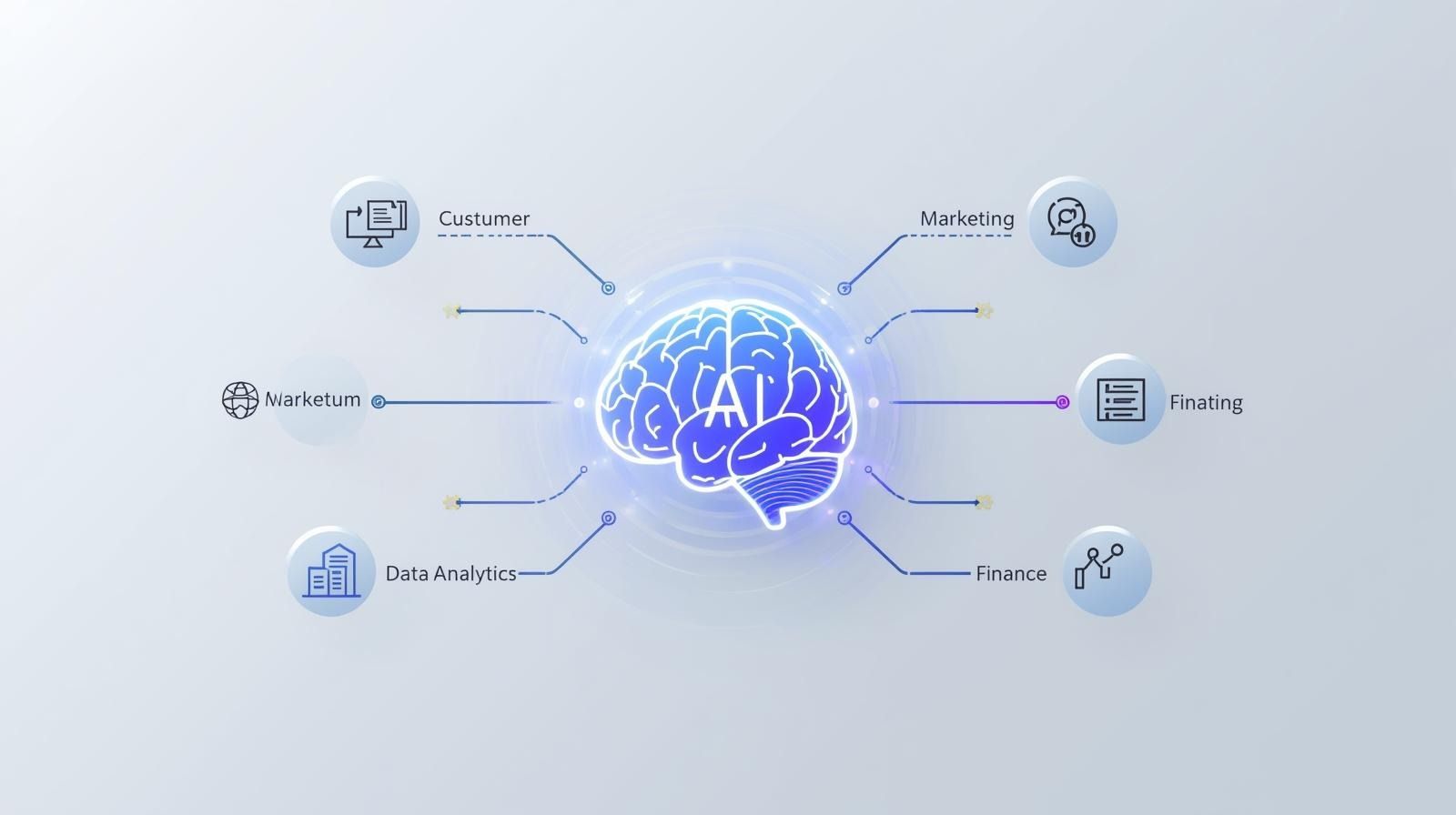
With automation of workflows within businesses, AI can be applied to automate operations in all business departments, including customer service, marketing, finance, HR, and logistics.
Why businesses are investing in AI automation
The reason why companies implement AI automation is to solve multiple operational tasks simultaneously.
First, it saves time that the employees can use in repetitive work. Data entry, document processing, scheduling, and report generation are all tasks that can be automated.
Also, the accuracy is enhanced through AI automation. Machines also work on systematic tasks and make fewer mistakes, thereby minimizing expensive mistakes.
And, it enables companies to grow without having to continually increase the number of their employees. The business can transact more, serve more people, and handle more data without additional overhead.
The other significant benefit is speed. The systems that run on AI are continuous, and this aspect enables the companies to react to their customers and market changes more quickly.
Due to such advantages, intelligent automation tools have become essential in most organizations to run their daily activities more efficiently.
How AI workflow automation improves business operations
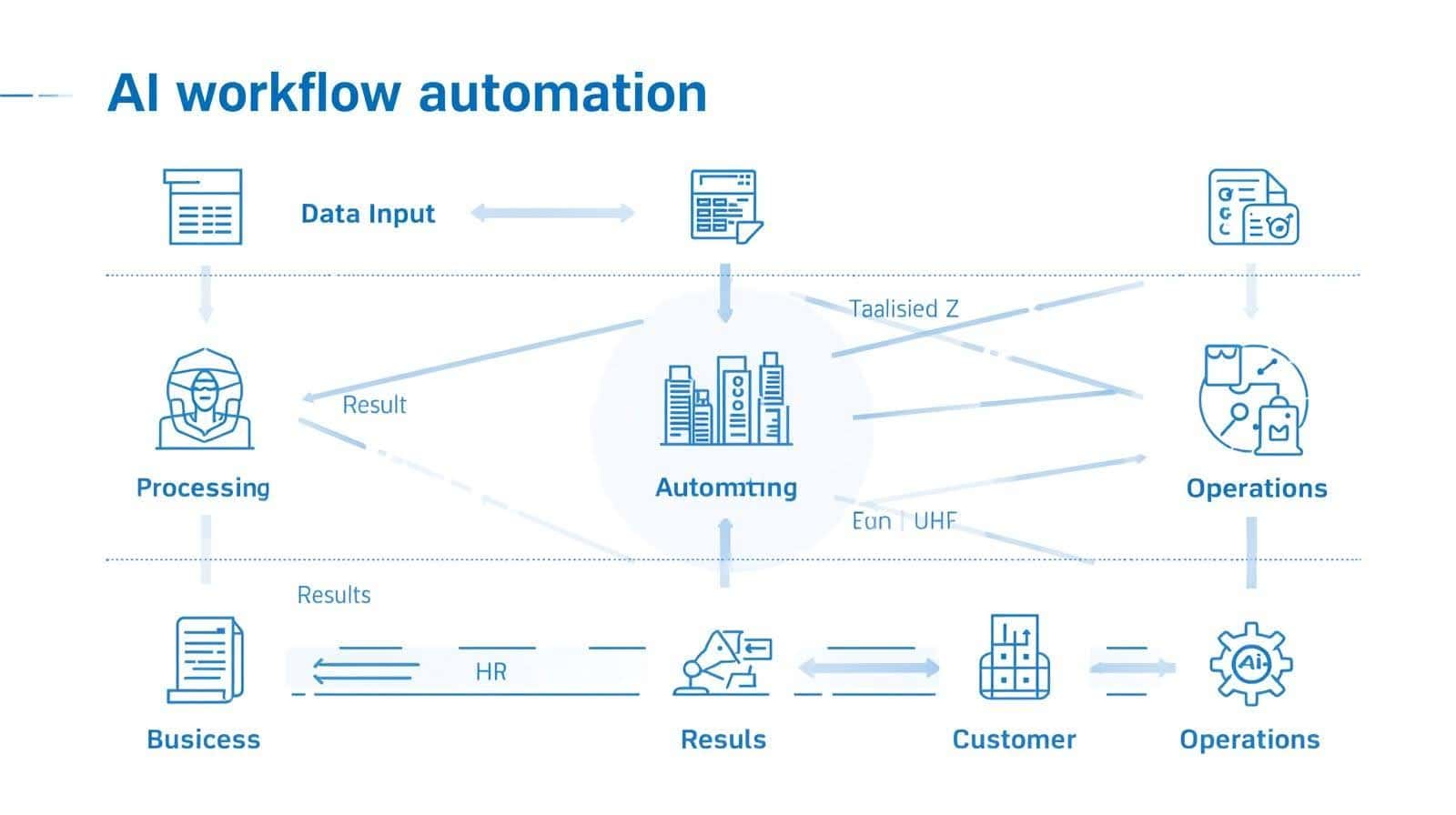
Workflow optimization is one of the most useful practices of AI in contemporary organizations.
Processes are the operations of every business. These procedures may have many stages, authorizations, and data transfers between systems. They make things sluggish and cause bottlenecks when performed manually.
Most of these inefficiencies are eliminated through AI workflow automation.
For example, AI systems can analyze invoices, check information, and provide approvals aided by AI in finance departments. Automation can be used to screen resumes, schedule interviews, and employee onboarding in HR teams.
AI automation is also relevant and helpful to customer support teams. Artificial intelligence will be able to classify support requests, propose answers, and direct complicated cases to the appropriate agents.
Such advances assist in making the employees concentrate on work of higher value rather than repetitive work.
AI automation across different business functions
Artificial intelligence automation is not a part of a single department. Firms use it in various fields of their operation.
In marketing, AI is used to simplify the management of campaigns, segmenting the audience, and analyzing performance. Companies can run specific campaigns as AI will track performance and improve it.
AI automation helps sales teams to monitor leads, manage customer data, and make follow-ups. These systems assist the sales representatives in focusing on the best opportunities.
Automation aids the operations teams in tracking inventory, demand, and supply chain optimization.
The AI chat systems and support automation are utilized by the customer service departments to handle inquiries and respond more quickly.
All these become possible through the incorporation of intelligent automation solutions in day-to-day operations.
The role of data in AI-powered automation
Information is essential in effective AI automation.
Using past data, AI systems acquire knowledge and forecast results. The less biased and organized the data, the better the automation works out.
As an illustration, the artificial intelligence devices can be used to examine the customer behavior in order to forecast their buying habits. Personalized offers and recommendations can then be automated by the businesses.
On the same note, AI can assist operations teams to process supply chain data and identify possible disruptions in advance.
The processing power of large databases makes AI automation much more potent than the conventional systems of business automation.
Challenges businesses should consider
Although AI automation has a lot of advantages, planning is a key step to its successful execution.
It is the responsibility of businesses to determine the processes that should be automated. AI is not necessary in every task, and human judgment is still useful in some processes.
Data quality also matters. Without quality data, there can be no quality results, and therefore, companies should have quality data sources in an organized and trustworthy manner prior to the implementation of the AI systems.
It may also be a problem of integration. More often than not, companies utilize various platforms and software tools, and thus automation solutions are required to interconnect with the installed systems.
This is the reason why most organizations engage technology partners or consultants in the implementation of highly advanced automation solutions.
The future of AI automation

AI automation will keep on developing as companies will use more advanced technology.
The new systems will not just make work automatic but will also coordinate the whole activity in different departments. Workflows will be controlled with the help of AI bots, and their results will be analyzed and improved automatically.
With the further development of these technologies, companies will depend on AI automation to make businesses even more efficient and competitive.
Companies investing in automation today are in a place to grow in the long term. They generate processes that are faster, smarter, and provide improved customer experiences.
With speed and efficiency being more critical than ever in the world, AI automation is rapidly becoming an essential element of contemporary business strategy.
Frequently Asked Questions (FAQs)
Everything you need to know about our products and services
The future of AI automation is focused on intelligent, end-to-end workflows that combine AI, automation, and business systems. Organizations are using AI to improve decision-making, increase productivity, and automate complex processes across departments.
AI automation delivers the greatest value in customer service, finance, HR, sales, marketing, supply chain, and IT operations by reducing manual work, improving accuracy, and accelerating business processes.
No. AI automation is designed to automate repetitive and data-intensive tasks, allowing employees to focus on strategic, creative, and customer-facing work. Human oversight remains essential for complex decisions and governance.
Businesses should identify repetitive workflows, improve data quality, integrate AI with existing systems, establish governance, and start with high-impact use cases before scaling automation across the organization.
CodeAutomation helps businesses implement AI automation through custom AI solutions, intelligent workflow automation, and enterprise integrations. Its solutions are designed to improve operational efficiency, reduce manual processes, and support scalable business growth.





Adnan Ghaffar is the visionary CEO of CodeAutomation.ai, a platform dedicated to transforming how businesses build software through cutting-edge automation. With over a decade of experience in software development, QA automation, and team leadership, Adnan has built a reputation for delivering scalable, intelligent, and high-performance solutions.
Under his leadership, CodeAutomation.ai has grown into a trusted name in AI-driven development, empowering startups and enterprises alike to streamline workflows, accelerate time-to-market, and maintain top-tier product quality. Adnan is passionate about innovation, process improvement, and building products that truly solve real-world problems.
More Articles
14/09/2026
How Can AI Business Automation Improve Customer Service Efficiency

27/ 04/ 2026
AI security solutions: Protecting systems with intelligent defense
06/ 03/ 2026
Top AI Software Development Companies In The US 2026
27/08/2026
What Is Low-Code/No-Code Development? A Complete Guide for Businesses

30 March 2026
Essential Automation Testing Tools to Boost QA Game
11/09/2026