





















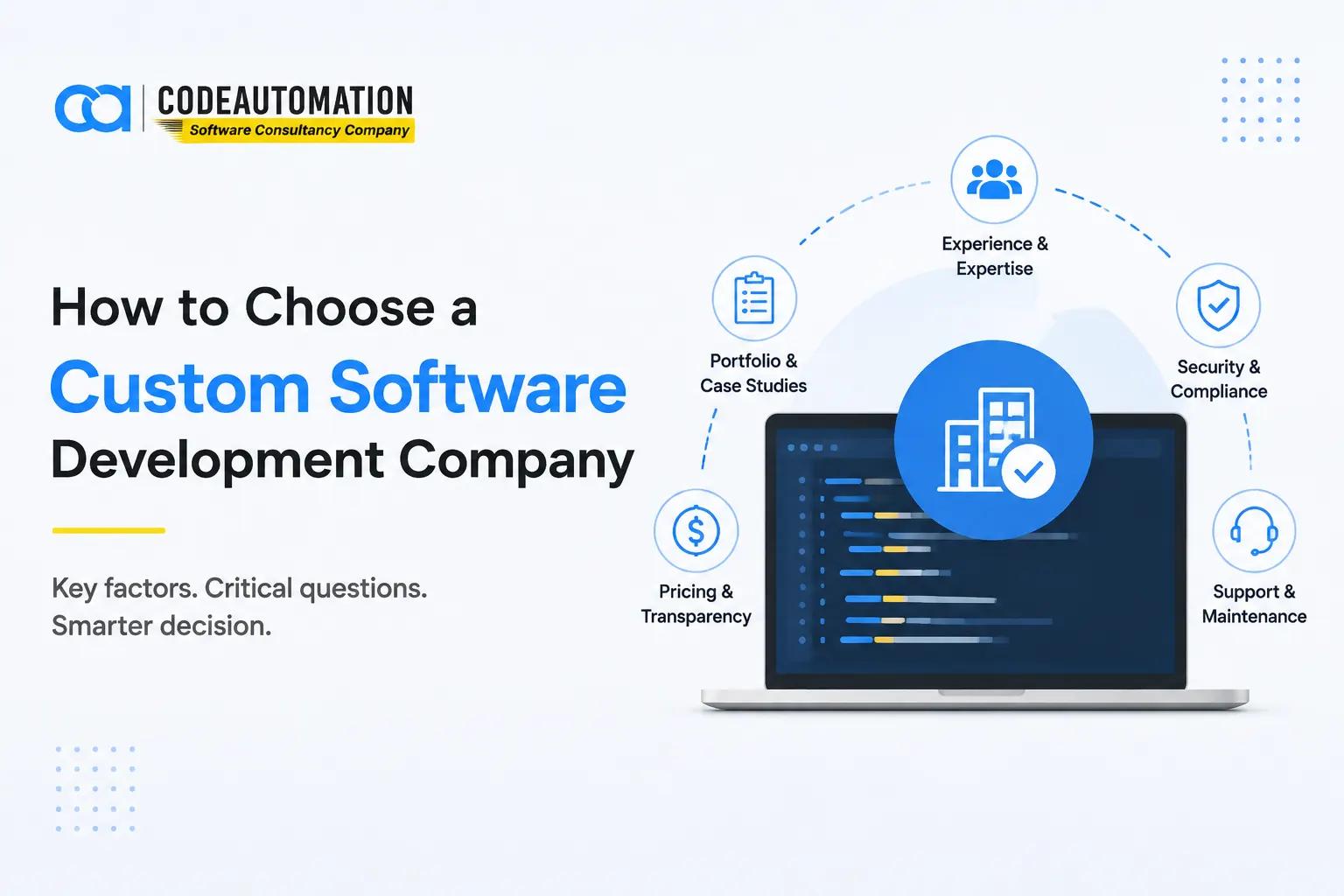
How to Choose a Custom Software Development Company
In today's hyper-competitive digital economy, off-the-shelf software often falls short of meeting unique operational demands. For US enterprises, startups, and mid-market organizations, custom software development is no longer just a luxury; it is a core driver of scalable growth, operational efficiency, and competitive differentiation.
Published 25/08/2026

Ready to Automate Your Success?
From AI-powered applications to scalable software development, we help businesses automate workflows and accelerate growth.
Book a Free ConsultationIn today's hyper-competitive digital economy, off-the-shelf software often falls short of meeting unique operational demands. For US enterprises, startups, and mid-market organizations, custom software development is no longer just a luxury; it is a core driver of scalable growth, operational efficiency, and competitive differentiation.
However, building high-performing software requires more than just skilled coders; it requires the right strategic development partner.
With thousands of agencies, boutiques, and enterprise vendors operating across the North American and global technology markets, identifying the ideal partner can feel overwhelming. Choosing incorrectly can result in bloated budgets, missed deadlines, security vulnerabilities, and ultimately, a product that fails to resonate with users.
This guide breaks down everything you need to know to evaluate, compare, and select the right custom software development company for your next big initiative.
Why Choosing the Right Development Partner Matters
Your software development partner acts as an extension of your internal team. They translate your business vision, strategic objectives, and user requirements into functional digital infrastructure. The stakes are exceptionally high: software projects involve significant financial capital, operational disruption, and strategic risk.
A world-class partner brings technical rigour, industry best practices, product management maturity, and risk mitigation strategies to the table. Conversely, a poor partnership can drain financial resources, derail product launches, and damage your brand reputation in the competitive US market.
Selecting the right team ensures high code quality, adherence to compliance standards such as HIPAA, SOC 2, or CCPA, scalability for future growth, and a transparent development lifecycle that protects your investment.
What to Look for in a Custom Software Development Company
- Technical Expertise: Your partner must possess deep proficiency in modern technology stacks aligned with your product vision. Whether you are building a cloud-native SaaS platform using AWS and microservices, an AI-driven analytics engine utilizing Python and machine learning frameworks, or a high-performance mobile application built with Flutter or React Native, verify their engineering credentials. Look for certified developers, robust code review practices, and experience with modern DevOps pipelines and automated testing.
- Industry Experience: While general software engineering principles apply universally, domain expertise matters immensely. A software partner with prior experience in your specific vertical, be it FinTech, Healthcare, EdTech, Logistics, or eCommerce, will already understand complex regulatory environments, user workflows, and industry-specific security protocols. This domain familiarity drastically reduces onboarding time and prevents costly architectural missteps.
- Development Methodology: Agile methodologies such as Scrum and Kanban have become the gold standard for custom software development in the US market. Ensure the company practices iterative development, continuous integration, and frequent sprint reviews. Agile transparency allows you to test working software early, provide continuous feedback, and pivot quickly if market dynamics or user requirements shift.
- Security Practices: Data breaches and cybersecurity vulnerabilities can destroy a business overnight. Your software partner must prioritize security from day one through a Secure Software Development Lifecycle. Inquire about their protocols for data encryption at rest and in transit, vulnerability scanning, penetration testing, dependency management, and adherence to regulatory frameworks like SOC 2 Type II, GDPR, HIPAA, or PCI-DSS depending on your industry.
- Communication: Miscommunication is the number one killer of software projects. Evaluate their communication infrastructure, English proficiency, project management tooling like Jira, Confluence, Slack, or Linear, and meeting cadences. You need a partner who provides proactive status updates, raises roadblocks immediately, and speaks transparently rather than telling you what you want to hear.
- Project Management: A dedicated, certified Scrum Master or Technical Product Manager should be assigned to your account. They act as the bridge between your business goals and the engineering team, tracking velocity, managing sprint backlogs, mitigating risks, and ensuring that milestones are met on time and within budget.
- Post-Launch Support: Software development does not end at deployment. Post-launch monitoring, bug fixes, performance tuning, and feature scaling are vital. Ensure the company offers robust Service Level Agreements, dedicated maintenance retainers, and long-term partnership models to support your product as it grows.
What Services Should a Software Development Company Offer?
A full-service custom software development partner should guide you through the entire software development lifecycle, from initial concept to post-launch optimization. Look for comprehensive service portfolios encompassing:
- Discovery: Collaborative workshops, stakeholder interviews, technical feasibility studies, requirements gathering, and product roadmap definition.
- UI/UX Design: User research, wireframing, interactive prototyping, user journey mapping, and conversion-optimized interface design.
- Custom Software Development: Scalable backend engineering, robust API development, and tailored enterprise software solutions.
- Application Development: Native and cross-platform mobile app development for iOS and Android, alongside responsive web applications.
- Integration: Seamlessly connecting your custom software with third-party APIs, enterprise resource planning tools, customer relationship management systems like Salesforce or HubSpot, payment gateways, and legacy systems.
- Testing: Rigorous Quality Assurance including automated testing, manual testing, performance testing, usability testing, and security audits.
- Maintenance: Ongoing technical support, cloud infrastructure monitoring, bug resolution, and feature enhancements.
Questions to Ask a Software Development Company
During preliminary discovery and interview calls, ask probing questions to uncover their operational maturity and cultural fit:
- Can you walk us through a project failure and explain how your team resolved it?
- Who will be working on our project day-to-day, and what are their specific qualifications?
- How do you handle scope creep, unexpected technical debt, and timeline adjustments?
- What does your code review and quality assurance workflow look like?
- Who owns the intellectual property and source code upon project completion? Ensure full intellectual property assignment is guaranteed in the contract.
- Can you provide two to three references from past clients in the US market whom we can contact?
How to Evaluate a Software Development Portfolio
A company's portfolio is tangible proof of its capabilities. When reviewing case studies and past projects, do not just look at aesthetic polish. Dig deeper:
- Problem-Solution Fit: Did their software solve a complex business problem, streamline operations, or drive quantifiable revenue growth for the client?
- Live Verification: Are the applications currently live in app stores or enterprise environments? Test them yourself if possible.
- Scalability and Complexity: Have they built enterprise-grade, high-concurrency systems, or only simple static landing pages and basic applications?
- Client Testimonials: Look for verified reviews on trusted platforms like Clutch, G2, and GoodFirms, paying special attention to reviews from US-based clients.
How to Compare Software Development Companies
When you have narrowed down your shortlist to three or four prospective partners, evaluate them based on key decision criteria:
- Cost Evaluation: Assess pricing models such as fixed-price versus time and materials, hourly rates, and total cost of ownership to ensure financial viability and prevent hidden budget overruns.
- Expertise Alignment: Look at tech stack matches, architectural prowess, and industry domain knowledge to determine technical capability and product performance.
- Timeline Commitments: Review estimated velocity, sprint schedules, and time-to-market commitments crucial for meeting market windows and investor milestones.
- Communication Standards: Analyze responsiveness, timezone overlap, and project management transparency that dictate operational smoothness and team synergy.
- Support Provisions: Examine post-launch service level agreement terms, warranty periods, and scaling retainers that protect your long-term software investment and reliability.
Red Flags to Watch for
Warning Signs:
- Unrealistically Low Estimates: If a bid is significantly lower than competitors, they are likely cutting corners on quality assurance, hiring junior developers, or planning to pad invoices later via massive scope creep.
- Vague Portfolios or Refusal to Provide References: If they cannot showcase verifiable past work or connect you with previous clients, walk away immediately.
- Poor Communication and Slow Response Times: If it takes days for their sales team to respond during the evaluation phase, expect even worse responsiveness once they have your money.
- Lack of Intellectual Property Ownership Clarity: Any company hesitant to explicitly sign over 100% intellectual property rights and source code ownership upon payment should be disqualified.
How Much Does It Cost to Hire a Software Development Company?
Software development costs vary wildly based on project scope, complexity, tech stack, and the vendor's geographic location. In the US market, hourly rates generally range as follows:
- US-based Boutique Agencies: $150 to $250+ per hour.
- Nearshore Agencies in Latin America or Eastern Europe: $50 - $100 per hour.
- Offshore Agencies in South Asia or Southeast Asia: $25 - $50 per hour.
How to Choose the Right Development Partner for Your Project
Synthesize all your findings into a final decision matrix. Involve key cross-functional stakeholders including product managers, lead engineers, financial officers, and end-users in the final pitch presentations.
Choosing a custom software development company is a strategic partnership decision that will shape your company's digital future. By taking a structured approach and evaluating technical chops, communication, portfolio depth, and security practices, you can secure a reliable partner capable of turning your software vision into a high-performing market reality.
Frequently Asked Questions (FAQs)
Everything you need to know about our products and services
Finding the right software development company can take anywhere from a few weeks to several months depending on project complexity, evaluation criteria, and the number of vendors being reviewed. A structured selection process helps businesses avoid costly mistakes and choose a partner aligned with their technical and business goals.
The choice depends on project requirements, budget, timeline, and long-term goals. A software development company can provide specialized expertise, established processes, and faster access to experienced teams without the overhead of building an internal engineering department.
Businesses should prepare a clear overview of their goals, target users, required features, existing systems, technical constraints, budget expectations, and project timelines. These details help development partners provide more accurate recommendations and estimates.
You can evaluate credibility by reviewing verified client testimonials, case studies, technical expertise, portfolio quality, development processes, security practices, and references from previous customers. Independent reviews and live product examples can also help validate their experience.
A strong technology partner goes beyond initial development by providing ongoing improvements, technical guidance, scalability planning, security updates, and support as business requirements evolve.





Adnan Ghaffar is the visionary CEO of CodeAutomation.ai, a platform dedicated to transforming how businesses build software through cutting-edge automation. With over a decade of experience in software development, QA automation, and team leadership, Adnan has built a reputation for delivering scalable, intelligent, and high-performance solutions.
Under his leadership, CodeAutomation.ai has grown into a trusted name in AI-driven development, empowering startups and enterprises alike to streamline workflows, accelerate time-to-market, and maintain top-tier product quality. Adnan is passionate about innovation, process improvement, and building products that truly solve real-world problems.
More Articles
15/09/2026
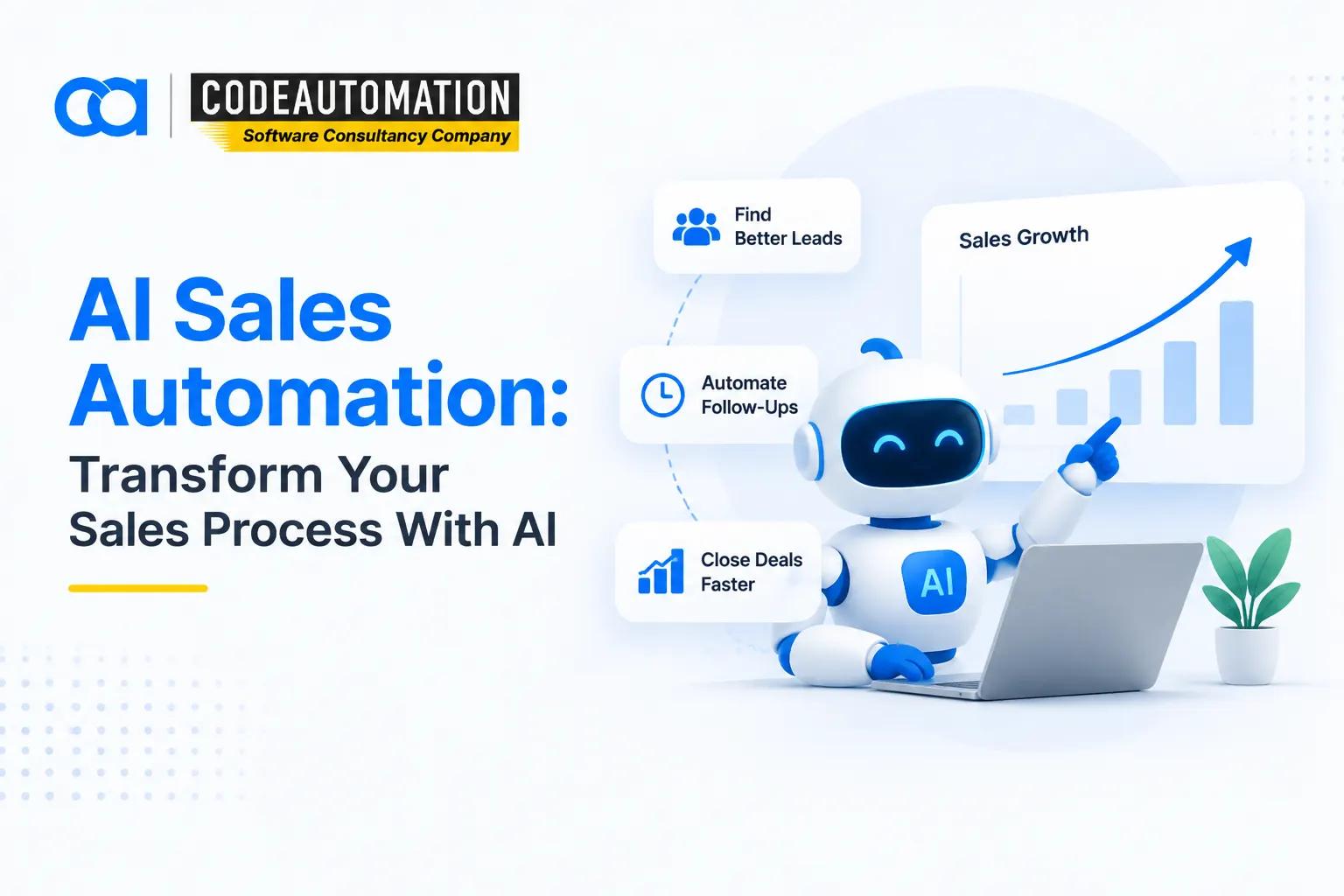
AI Sales Automation Transform Your Sales Process With AI

10 April 2025
Why QA Testers Are Essential in Software Development – Especially in the Age of AI ?
04/09/2026
What Are AI Agents A Complete Guide for Businesses
31/08/2026
How Much Do AI Automations Cost in 2026?

25/ 04/ 2026
AI data analytics solutions: Turning data into business value

12 February 2026