




















AI CRM Automation: AI Solutions That Integrate With Popular CRM Systems
Published 16/09/2026
Customer relationship management (CRM) systems have become essential for modern businesses. Companies use CRM platforms to manage customer information, track sales opportunities, monitor communication, and improve customer relationships.
Customer relationship management (CRM) systems have become essential for modern businesses. Companies use CRM platforms to manage customer information, track sales opportunities, monitor communication, and improve customer relationships.
However, many businesses still struggle to get maximum value from their CRM systems.
Sales teams often spend hours updating records manually. Marketing teams struggle to personalize campaigns. Customer support teams need faster access to customer information.
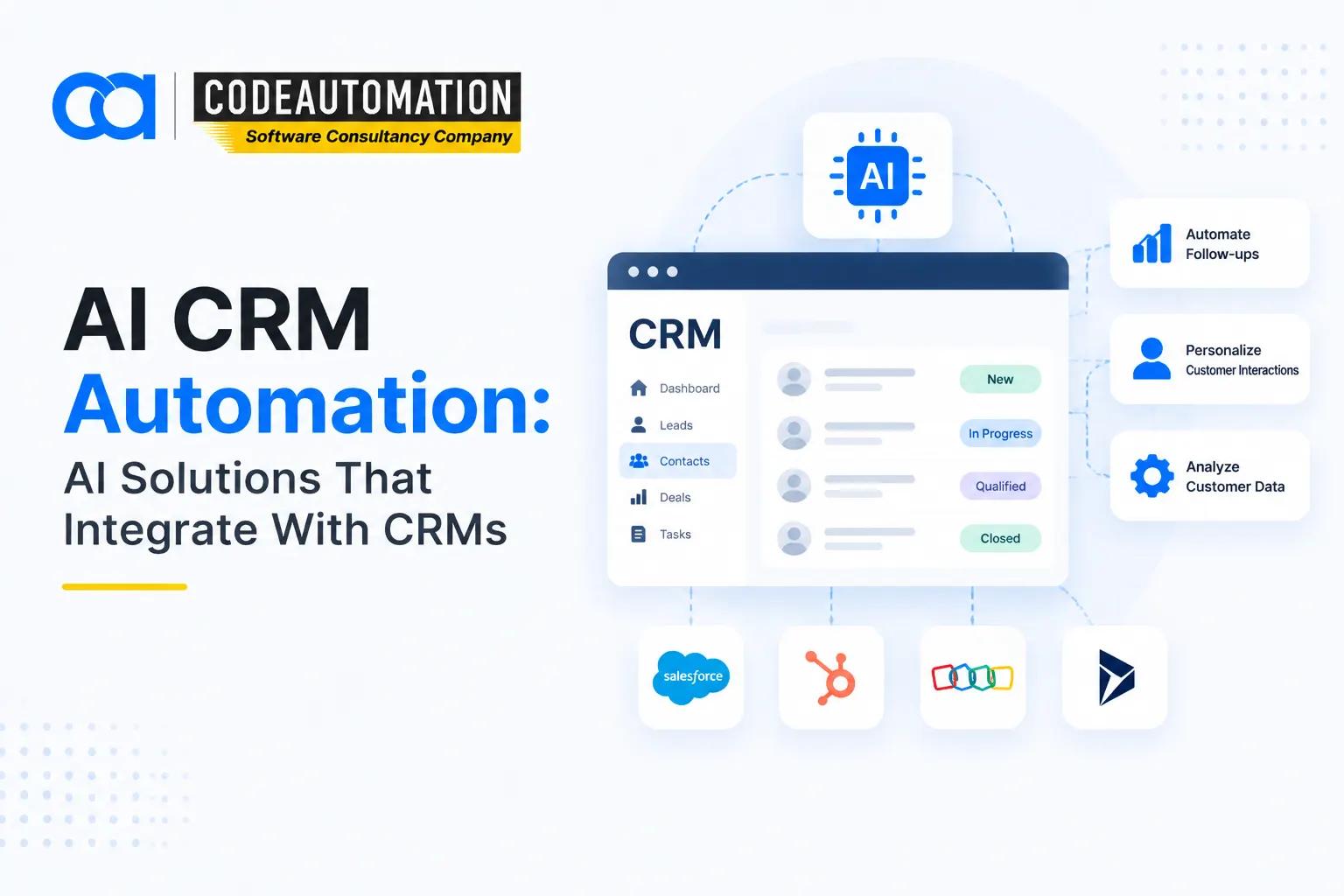
AI CRM automation solves these challenges by combining artificial intelligence with CRM platforms to automate repetitive tasks, analyze customer data, and improve decision-making.
AI-powered CRM solutions can connect with popular platforms such as Salesforce, HubSpot, Microsoft Dynamics 365, Zoho CRM, and custom CRM systems to create intelligent workflows that improve sales, marketing, and customer service operations.
Instead of simply storing customer information, AI-enabled CRM systems can analyze data, predict customer behavior, recommend actions, and automatically complete tasks.
What Is AI CRM Automation?
AI CRM automation is the integration of artificial intelligence technologies with CRM systems to automate customer-related workflows and improve business processes.
Traditional CRM automation works through predefined rules.
For example:
- Create a task when a new lead enters the CRM
- Send an email after a specific period
- Assign leads based on fixed conditions
AI CRM automation goes beyond simple rules by using machine learning, natural language processing, and intelligent workflows.
AI-powered CRM systems can:
- Analyze customer interactions
- Predict sales opportunities
- Score leads automatically
- Generate customer insights
- Automate follow-ups
- Update CRM records
- Personalize customer communication
The purpose of AI CRM automation is to help businesses use customer data more effectively while reducing manual work.
How AI Integrates With CRM Systems
AI integration with CRM platforms typically involves connecting customer data, AI models, and automation workflows.
The process includes three main stages.
1. Data Synchronization
AI systems collect and connect customer information from multiple business sources.
These sources may include:
- CRM databases
- Emails
- Phone conversations
- Marketing platforms
- Website interactions
- Customer support systems
- Sales applications
By combining this information, AI creates a complete view of customer activity.
For example, instead of a salesperson manually reviewing different systems, AI can analyze:
- Previous conversations
- Customer interests
- Purchase history
- Website activity
- Engagement patterns
This allows teams to understand customers more effectively.
2. AI Data Analysis
After collecting information, AI analyzes customer data to identify patterns and insights.
AI can evaluate:
- Customer buying behavior
- Lead quality
- Sales pipeline activity
- Customer sentiment
- Engagement levels
For example, AI can identify that a lead is highly interested because they:
- Downloaded multiple resources
- Visited pricing pages
- Opened several emails
- Requested product information
Sales teams can then prioritize that opportunity.
3. Automated Actions
After analyzing data, AI can automatically perform actions inside the CRM.
Examples include:
- Updating customer records
- Creating follow-up tasks
- Sending personalized messages
- Assigning leads
- Generating reports
- Updating sales pipelines
This allows businesses to maintain accurate CRM data without constant manual updates.

Ready to Automate Your Success?
From AI-powered applications to scalable software development, we help businesses automate workflows and accelerate growth.
Book a Free ConsultationBenefits of AI CRM Automation
1. Automates Manual Data Entry
One of the biggest challenges with CRM systems is maintaining accurate customer records.
Sales representatives often forget or delay updating:
- Customer notes
- Deal stages
- Meeting information
- Contact details
AI automation can automatically capture and update information from:
- Emails
- Calls
- Meetings
- Customer interactions
This improves CRM accuracy and saves employee time.
2. Improves Lead Management
AI helps businesses identify and prioritize the most valuable opportunities.
AI-powered lead management can:
- Score leads automatically
- Analyze buying intent
- Identify sales-ready prospects
- Recommend follow-up actions
Instead of treating every lead equally, sales teams can focus on opportunities with higher conversion potential.
3. Creates Personalized Customer Experiences
Customers expect personalized interactions.
AI CRM automation helps businesses deliver customized experiences by analyzing:
- Customer preferences
- Previous purchases
- Communication history
- Behavior patterns
Businesses can create:
- Personalized emails
- Product recommendations
- Targeted campaigns
- Customer-specific offers
4. Improves Sales Forecasting
Accurate sales forecasting helps businesses plan resources and make better decisions.
Traditional forecasting often depends on manual updates from sales teams.
AI forecasting analyzes:
- Historical sales data
- Pipeline activity
- Customer behavior
- Conversion patterns
AI can help predict:
- Revenue trends
- Deal probability
- Sales risks
- Growth opportunities
5. Enhances Customer Support
AI-powered CRM solutions help support teams respond faster.
AI can:
- Analyze customer history
- Recommend solutions
- Automate responses
- Create support tickets
- Prioritize urgent issues
This improves customer experience while reducing support workload.
Popular CRM Systems That Integrate With AI Automation
Many popular CRM platforms now support AI capabilities or allow businesses to integrate external AI solutions.
Salesforce AI Automation
Salesforce is one of the most widely used CRM platforms for enterprise organizations.
Salesforce AI capabilities include:
- Predictive analytics
- Sales recommendations
- Customer insights
- Automated workflows
- AI-generated content
Businesses can integrate custom AI solutions with Salesforce to automate:
- Lead qualification
- Sales reporting
- Customer communication
- Data management
HubSpot AI Automation
HubSpot provides CRM, marketing, sales, and customer service capabilities.
AI integration with HubSpot can help businesses automate:
- Lead management
- Email personalization
- Customer segmentation
- Sales assistance
- Marketing workflows
Businesses can also connect custom AI solutions with HubSpot using APIs and automation platforms.
Microsoft Dynamics 365 AI Automation
Microsoft Dynamics 365 combines CRM and business applications with AI capabilities.
AI-powered workflows can support:
- Sales forecasting
- Customer insights
- Service automation
- Business recommendations
Organizations using Microsoft ecosystems can integrate AI solutions across their existing applications.
Zoho CRM AI Automation
Zoho CRM includes AI capabilities through Zoho Zia.
AI features include:
- Lead predictions
- Sales recommendations
- Data analysis
- Workflow automation
Businesses can also extend Zoho CRM with custom AI integrations.
Pipedrive AI Integration
Pipedrive is commonly used by sales teams for pipeline management.
AI automation can help with:
- Sales activity recommendations
- Follow-up automation
- Deal insights
- Customer information management
AI Solutions That Integrate With CRM Systems
1. AI Sales Assistants
AI sales assistants help sales teams complete everyday activities faster.
They can:
- Draft emails
- Summarize meetings
- Recommend follow-up actions
- Answer sales questions
- Update CRM information
Example:
After a sales meeting, an AI assistant can summarize the conversation and automatically add notes to the CRM.
2. AI Lead Qualification Agents
AI agents can analyze incoming leads and determine their quality.
They evaluate:
- Company information
- Customer behavior
- Engagement history
- Buying signals
AI lead qualification agents can:
- Rank prospects
- Assign leads
- Recommend next actions
3. AI Customer Support Agents
AI support agents integrate with CRM systems to improve customer service.
They can:
- Answer common questions
- Access customer history
- Create tickets
- Update CRM records
This helps businesses provide faster support.
4. AI Marketing Automation Agents
AI marketing agents help businesses automate customer engagement.
They can:
- Segment audiences
- Create campaigns
- Analyze performance
- Recommend improvements
AI CRM Automation Use Cases
Sales Automation
AI can automate sales processes such as:
- Lead assignment
- Follow-up reminders
- Customer research
- Pipeline updates
- Sales reports
Customer Support Automation
Businesses use AI CRM automation for:
- Chat support
- Ticket management
- Customer history analysis
- Automated responses
Marketing Automation
AI helps marketing teams with:
- Customer segmentation
- Email campaigns
- Personalized messaging
- Lead nurturing
Reporting Automation
AI can automatically generate:
- Sales reports
- Customer insights
- Performance summaries
- Forecasting reports
AI CRM Tools vs Custom AI CRM Solutions
Businesses have two main options when adopting AI CRM automation.
Ready-Made AI CRM Tools
Advantages:
- Faster deployment
- Lower implementation cost
- Existing AI features
- Easier adoption
Limitations:
- Limited customization
- May not support unique workflows
- Less flexibility
These solutions work well for businesses with standard CRM requirements.
Custom AI CRM Automation Solutions
Custom AI solutions are built according to specific business needs.
They can connect:
- CRM systems
- ERP platforms
- Marketing tools
- Internal databases
- Communication systems
Benefits include:
- Custom AI workflows
- AI agents designed for business processes
- Advanced automation
- Better scalability
- Industry-specific solutions
Businesses with complex operations often choose custom AI development to maximize automation opportunities.
How To Implement AI CRM Automation
Step 1: Identify CRM Challenges
Businesses should first identify repetitive and inefficient processes.
Examples:
- Manual data entry
- Slow follow-ups
- Poor lead tracking
- Reporting challenges
Step 2: Connect Business Systems
AI works best when connected with existing business data.
Common integrations include:
- CRM platforms
- Email systems
- Marketing platforms
- ERP systems
- Customer support tools
Step 3: Build AI Workflows
Organizations can create:
- AI assistants
- AI agents
- Automated workflows
- Predictive analytics systems
Step 4: Measure Results
Businesses should track:
- Time saved
- Sales productivity
- Customer satisfaction
- Conversion improvements
Continuous monitoring helps improve AI performance.
Challenges of AI CRM Integration
Data Quality
AI depends on accurate customer information.
Incomplete or outdated CRM data can reduce AI effectiveness.
Integration Complexity
Connecting AI solutions with existing CRM systems requires:
- Proper APIs
- Data mapping
- Security planning
Security and Privacy
CRM systems contain sensitive customer information.
Businesses need:
- Access controls
- Data protection measures
- Compliance processes
How CodeAutomation Helps Build AI CRM Automation Solutions
Every business has different sales processes, customer journeys, and technology requirements.
Standard CRM features may not always solve complex automation challenges.
CodeAutomation helps businesses build custom AI CRM automation solutions, including:
- AI CRM integrations
- AI sales assistants
- AI agents
- Workflow automation
- Custom CRM solutions
- Enterprise AI applications
Our team helps organizations connect their existing CRM platforms with intelligent automation solutions that improve productivity, customer engagement, and operational efficiency.
Frequently Asked Questions (FAQs)
Everything you need to know about our products and services
AI automation solutions that integrate with CRM systems include AI sales assistants, AI agents, predictive analytics platforms, chatbots, and workflow automation solutions.
Yes. AI solutions can integrate with Salesforce, HubSpot, Microsoft Dynamics 365, Zoho CRM, and other CRM platforms through APIs and automation workflows.
AI improves CRM systems by automating data entry, analyzing customer behavior, improving lead management, and providing intelligent recommendations.
AI agents are intelligent systems that analyze CRM data, perform tasks automatically, update records, and support sales, marketing, and customer service workflows.
Businesses with basic needs can use built-in CRM AI features, while organizations requiring unique workflows and advanced integrations can benefit from custom AI CRM solutions.





Adnan Ghaffar is the visionary CEO of CodeAutomation.ai, a platform dedicated to transforming how businesses build software through cutting-edge automation. With over a decade of experience in software development, QA automation, and team leadership, Adnan has built a reputation for delivering scalable, intelligent, and high-performance solutions.
Under his leadership, CodeAutomation.ai has grown into a trusted name in AI-driven development, empowering startups and enterprises alike to streamline workflows, accelerate time-to-market, and maintain top-tier product quality. Adnan is passionate about innovation, process improvement, and building products that truly solve real-world problems.
More Articles
How to Leverage AI in Marketing: A Practical Guide 2026

05/ 11/ 2025
How Software and QA Testing Services help reduce post release chaos for scaling SaaS teams
08/09/2026
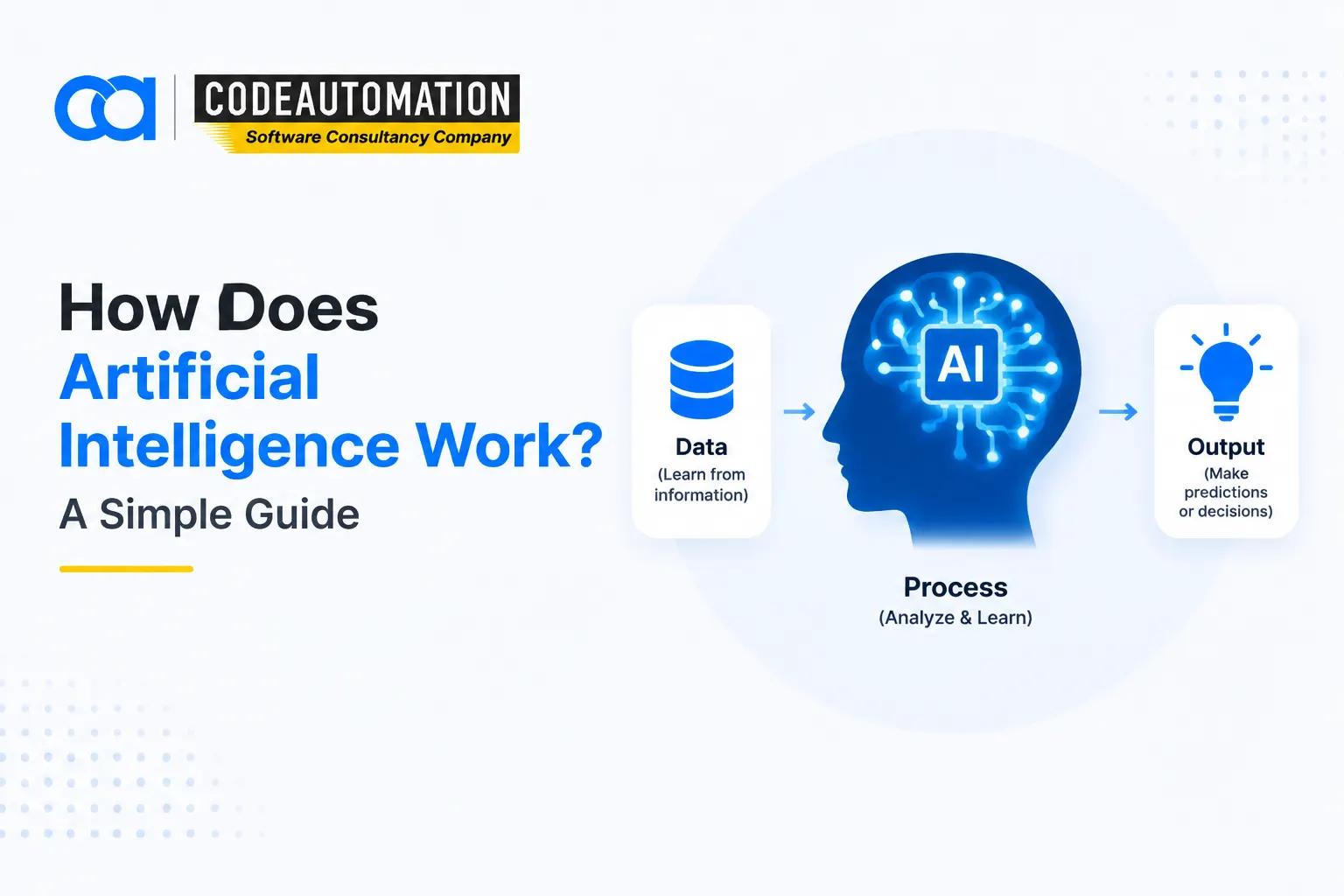
How Does Artificial Intelligence Work? A Simple Guide
22/08/2026
What are the benefits of custom software?
01/10/2026
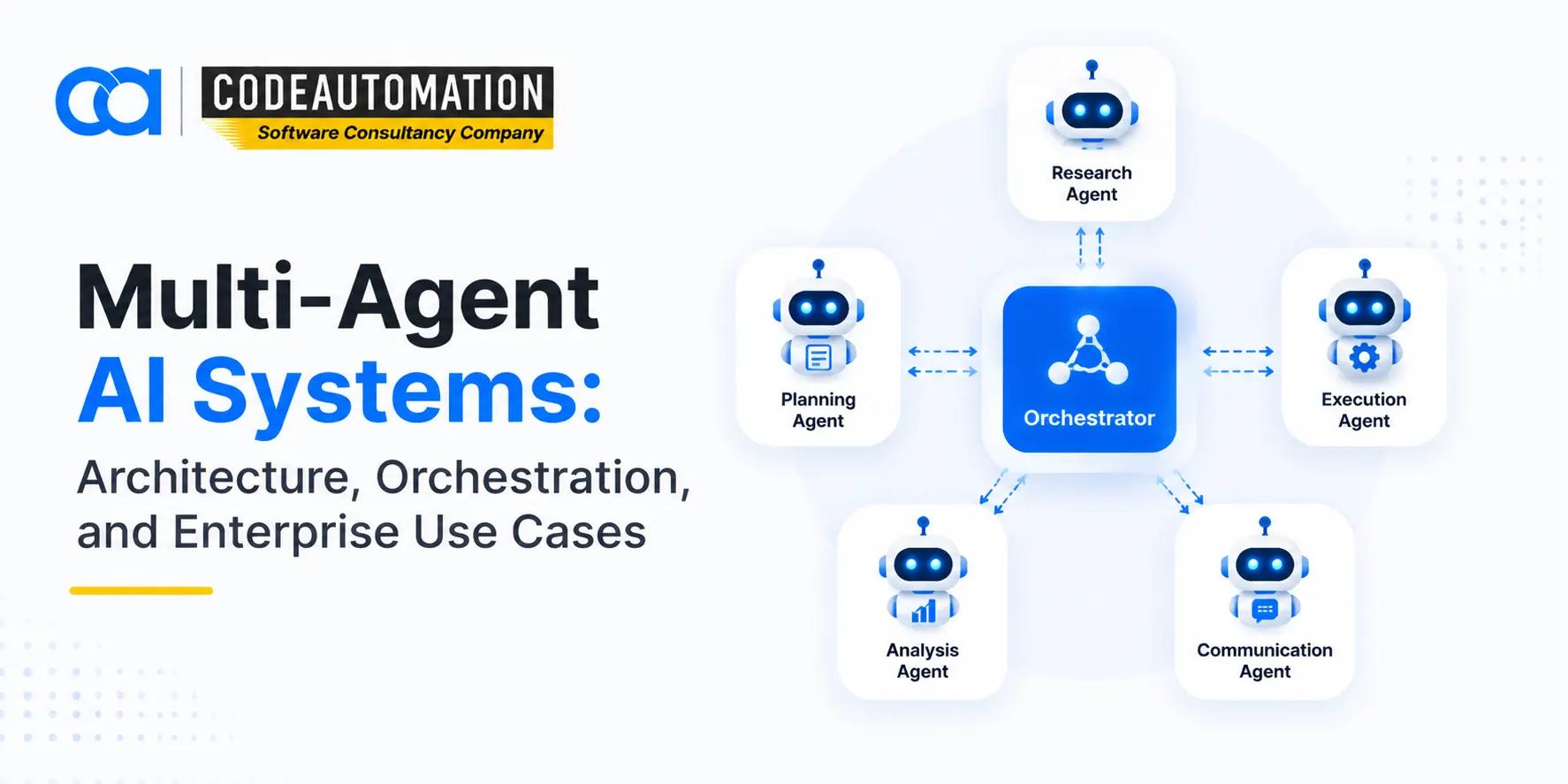
Multi-Agent AI Systems: Architecture, Orchestration, and Enterprise Use Cases
15/ 09/ 2025