























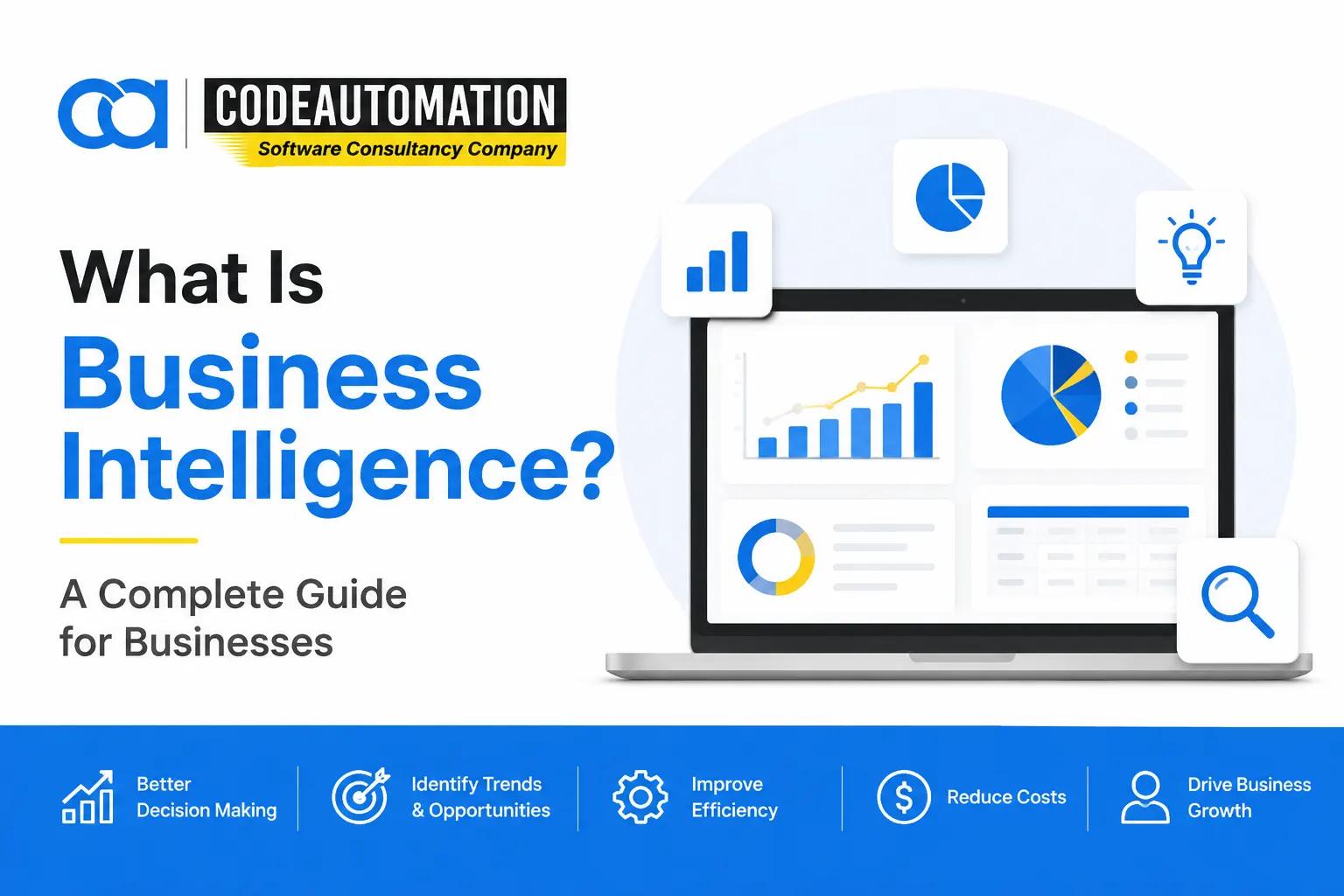
What Is Business Intelligence? A Complete Guide for Modern Businesses
Published 26/08/2026
Businesses generate more data than ever before. Customer interactions, sales transactions, operational systems, financial records, and digital platforms continuously create valuable information. However, raw data alone does not create business value.

Ready to Automate Your Success?
From AI-powered applications to scalable software development, we help businesses automate workflows and accelerate growth.
Book a Free ConsultationBusinesses generate more data than ever before. Customer interactions, sales transactions, operational systems, financial records, and digital platforms continuously create valuable information. However, raw data alone does not create business value.
Organizations need a way to collect, organize, analyze, and transform data into meaningful insights that support better decisions.
This is where business intelligence (BI) plays an important role.
Business intelligence helps companies convert complex data into actionable information through reporting, analytics, dashboards, and data visualization. Modern BI solutions allow organizations to understand performance, identify opportunities, improve efficiency, and make strategic decisions based on accurate information.
Today, business intelligence has evolved beyond traditional reporting. Modern BI combines analytics, automation, cloud platforms, and artificial intelligence to help businesses access insights faster and embed data-driven decision-making into everyday operations.
What Is Business Intelligence?
Business intelligence is the process of collecting, integrating, analyzing, and presenting business data to help organizations make informed decisions.
A business intelligence system combines data from multiple sources, such as:
- Customer relationship management (CRM) systems
- Enterprise resource planning (ERP) platforms
- Sales applications
- Financial systems
- Websites and digital platforms
- Databases
The goal of BI is to transform disconnected information into a clear understanding of business performance.
For example, a company may use business intelligence to answer questions like:
- Which products generate the highest revenue?
- Why are customer conversions increasing or decreasing?
- Which operational processes need improvement?
- Where can costs be reduced?
- What trends may impact future growth?
Instead of relying on assumptions, businesses can use accurate data insights to guide decisions.
Why Is Business Intelligence Important for Modern Businesses?
Many organizations struggle because their data exists across multiple systems. Teams often spend significant time manually collecting reports, cleaning spreadsheets, and preparing information before decisions can be made.
Business intelligence solves this challenge by creating a centralized approach to understanding business performance.
Key benefits of business intelligence include:
Faster Decision-Making
BI dashboards and reports provide real-time visibility into important business metrics, allowing leaders to make decisions faster.
Improved Operational Efficiency
By identifying bottlenecks and performance gaps, businesses can optimize processes and reduce unnecessary manual work.
Better Customer Understanding
Analyzing customer behavior helps organizations improve experiences, personalize interactions, and identify growth opportunities.
Increased Data Accuracy
Centralized reporting reduces inconsistencies caused by disconnected spreadsheets and manual reporting processes.
Competitive Advantage
Organizations that effectively use data can identify trends earlier and respond faster to market changes.
How Does Business Intelligence Work?
A business intelligence process typically includes several key stages:
1. Data Collection
The first step is gathering data from different sources.
Examples include:
- Sales systems
- Customer databases
- Marketing platforms
- Financial applications
- Website analytics
2. Data Integration
Collected data often exists in different formats and systems.
BI solutions integrate this information into a unified environment using technologies such as:
- Data pipelines
- APIs
- ETL processes
- Data warehouses
This creates a reliable foundation for analysis.
3. Data Processing and Analysis
After integration, data is cleaned, organized, and analyzed to identify patterns and trends.
Businesses can analyze:
- Revenue performance
- Customer behavior
- Operational metrics
- Market trends
- Product performance
4. Data Visualization
BI platforms convert complex information into understandable formats such as:
- Interactive dashboards
- Reports
- Charts
- Performance indicators
This allows business users to quickly understand important insights.
5. Decision Making
The final goal of BI is action.
Organizations use insights to:
- Improve strategies
- Optimize operations
- Increase revenue
- Reduce costs
- Improve customer experiences
Key Components of Business Intelligence
A complete business intelligence environment includes several important components.
Data Sources
Business intelligence starts with reliable data from different business systems.
Common sources include:
- CRM platforms
- ERP systems
- Applications
- Databases
- Third-party platforms
Data Warehouse
A data warehouse stores structured information from multiple sources in one centralized location.
It allows businesses to analyze historical and current data efficiently.
Data Analytics
Analytics helps organizations discover patterns, trends, and relationships within their data.
Common analytics approaches include:
- Descriptive analytics
- Diagnostic analytics
- Predictive analytics
Data Visualization and Dashboards
Dashboards provide an easy way to monitor important business metrics.
Examples:
- Sales dashboards
- Financial dashboards
- Customer dashboards
- Operational dashboards
Business Intelligence vs Data Analytics
Business intelligence and data analytics are closely related but serve different purposes.
Business Intelligence Data Analytics Focuses on analyzing business performance Focuses on exploring and interpreting data Primarily uses historical and current data Can include predictive and advanced analysisHelps organizations monitor and improve operationsHelps discover deeper patterns and future possibilities
Modern businesses often use both together. BI provides visibility into performance, while analytics helps uncover additional insights.
Traditional BI vs Modern Business Intelligence
Traditional BI mainly focused on static reports generated by technical teams.
Modern BI has evolved into a more flexible and accessible approach.
Modern BI includes:
- Real-time dashboards
- Cloud-based analytics
- Self-service reporting
- Automated insights
- AI-powered analytics
Artificial intelligence is increasingly becoming part of BI workflows by helping organizations automate analysis, improve data preparation, and discover insights faster.
Business Intelligence Examples Across Industries
Healthcare
Healthcare organizations use BI to analyze:
- Patient information
- Operational efficiency
- Resource utilization
- Healthcare trends
Ecommerce
Ecommerce companies use BI for:
- Customer behavior analysis
- Product performance tracking
- Sales forecasting
- Marketing optimization
Finance
Financial organizations use BI to monitor:
- Revenue
- Risk
- Customer activity
- Operational performance
SaaS Companies
Software companies use BI to analyze:
- User engagement
- Product adoption
- Customer retention
- Subscription performance
How Businesses Can Implement Business Intelligence Successfully
Successful BI implementation requires more than selecting a reporting tool.
Businesses should focus on:
Defining Clear Objectives
Identify what decisions the BI system should improve.
Connecting Reliable Data Sources
Ensure important business data is accessible and accurate.
Choosing the Right BI Architecture
Select solutions that match business size, complexity, and future growth.
Creating Useful Dashboards
Build dashboards focused on meaningful business metrics rather than unnecessary information.
Continuously Improving
BI should evolve as business requirements and data needs change.
Businesses looking to build customized analytics environments often work with experienced providers offering business intelligence services to design, integrate, and optimize BI solutions around their specific goals.
The Future of Business Intelligence
Business intelligence continues evolving as organizations demand faster and more intelligent insights.
Future BI environments will increasingly include:
- Artificial intelligence
- Predictive analytics
- Automated reporting
- Natural language querying
- Real-time decision support
The future of BI is moving from simply showing what happened to helping businesses understand why it happened and what actions they should take next.
Need a Business Intelligence Solution Built Around Your Data?
Every organization has different data challenges. A customized BI approach can help connect your systems, automate reporting, and create actionable insights.
Explore our Business Intelligence Services to build a scalable analytics solution aligned with your business goals.
Frequently Asked Questions (FAQs)
Everything you need to know about our products and services
Business intelligence is the process of collecting and analyzing business data to create useful insights that help organizations make better decisions.
Businesses use BI to improve decision-making, automate reporting, understand customers, monitor performance, and identify opportunities for growth.
The main components of BI include data sources, data integration, data storage, analytics, reporting, and data visualization.
Business intelligence focuses on monitoring and improving business performance, while data analytics focuses on deeper analysis to discover patterns and future insights.
Companies can implement BI solutions by defining business goals, integrating data sources, selecting appropriate technologies, building dashboards, and continuously improving their analytics processes.





Adnan Ghaffar is the visionary CEO of CodeAutomation.ai, a platform dedicated to transforming how businesses build software through cutting-edge automation. With over a decade of experience in software development, QA automation, and team leadership, Adnan has built a reputation for delivering scalable, intelligent, and high-performance solutions.
Under his leadership, CodeAutomation.ai has grown into a trusted name in AI-driven development, empowering startups and enterprises alike to streamline workflows, accelerate time-to-market, and maintain top-tier product quality. Adnan is passionate about innovation, process improvement, and building products that truly solve real-world problems.
More Articles

18/09/2026
GIS Solutions for Logistics: How Geospatial Technology Improves Supply Chain Operations
02/10/2026
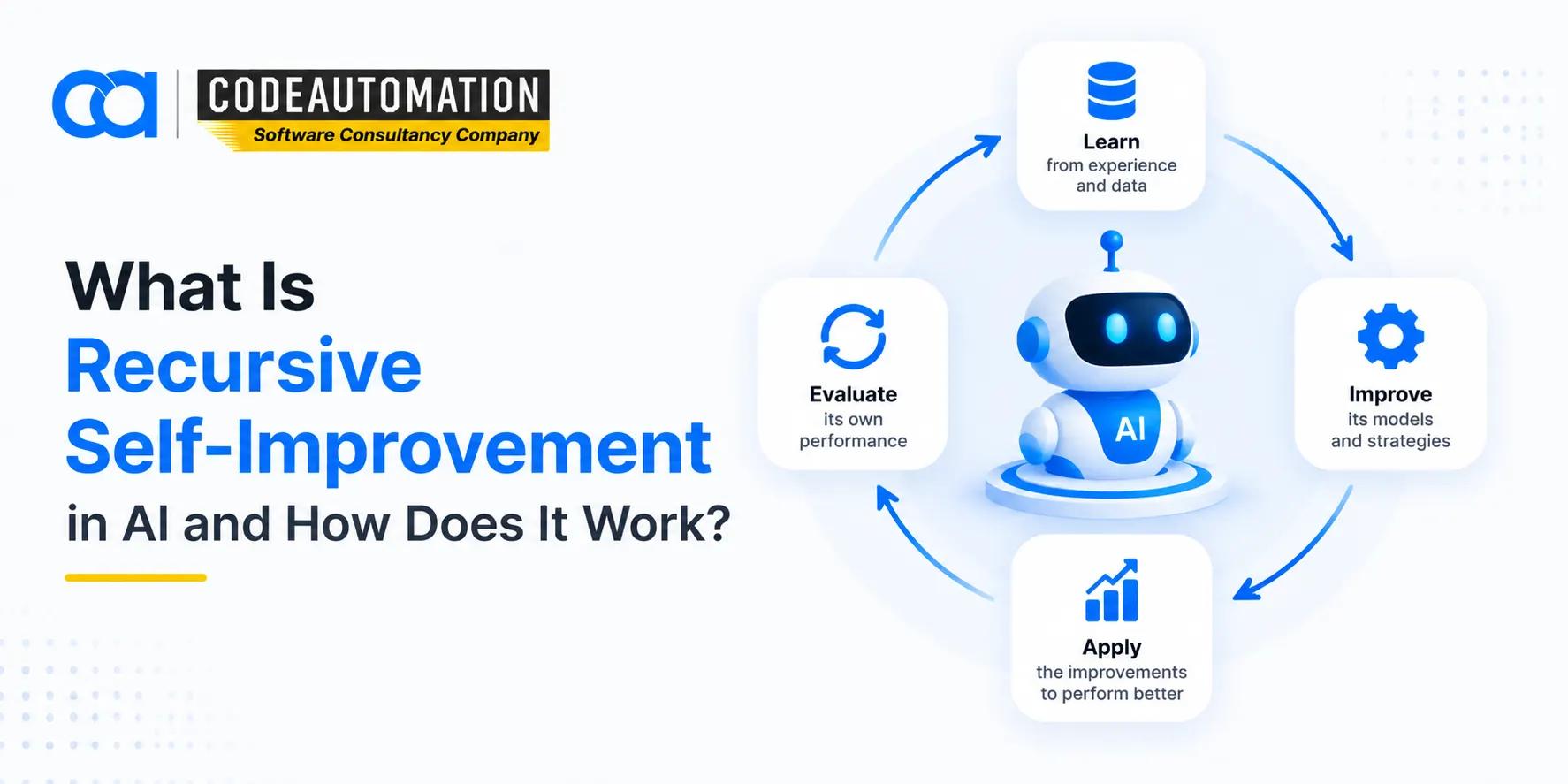
What Is Recursive Self-Improvement in AI and How Does It Work?

06/ 03/ 2026
Top AI Software Development Companies In The US 2026
03/ 09/ 2026
The Future of AI Automation in Modern Businesses in 2026

02/10/2026
What Is an Intelligence Explosion and How Could It Happen?
14/09/2026