






















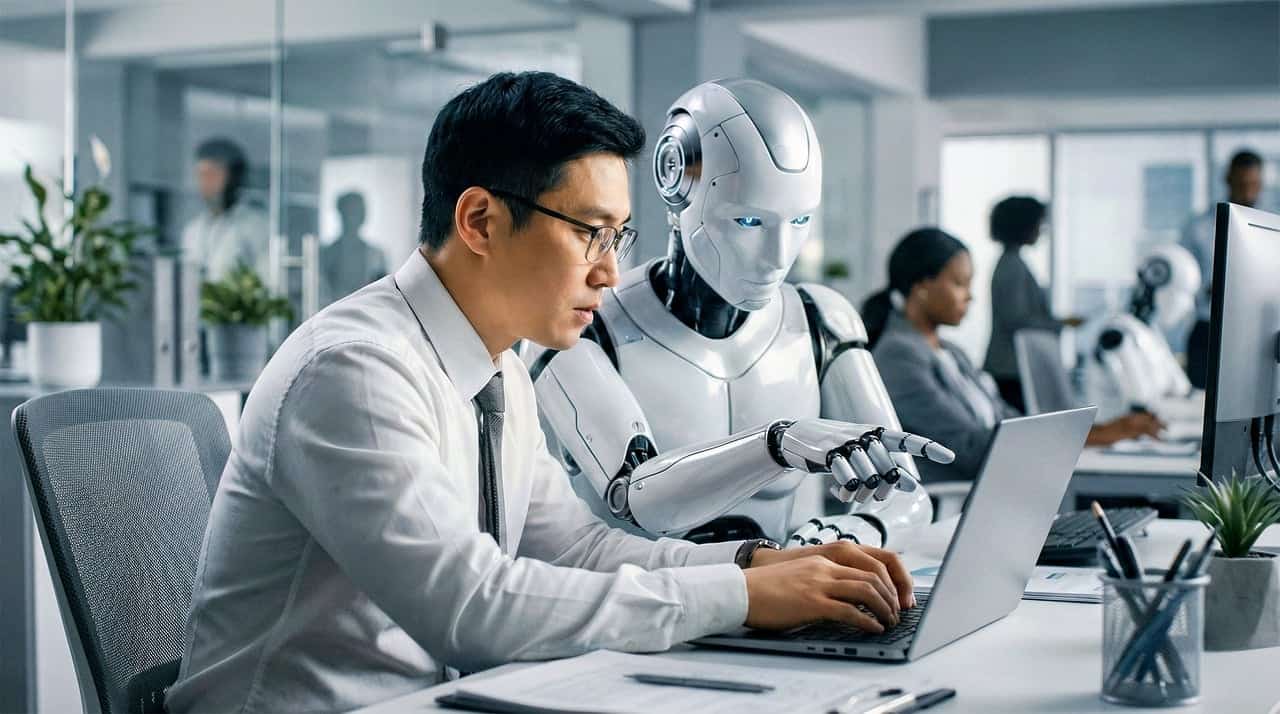
How Enterprise AI Powers Intelligent Automation
How Enterprise AI Powers Intelligent Automation
Published 05/ 05/ 2026
Corporate businesses are more than ever before handling complexity. Between dealing with huge groups of people and international business, it is under constant stress to remain efficient and competitive, including the need to deal with huge amounts of data. No longer is it sufficient to use traditional tools and manual workflows in this environment.

Ready to Automate Your Success?
From AI-powered applications to scalable software development, we help businesses automate workflows and accelerate growth.
Book a Free ConsultationThis is where AI agents of corporate business are being felt.
In contrast to simple automation tools, AI agents are created to think, adapt and act on their own. They do not help; they own tasks, make things run smoothly, and bring organizations to scale. The year 2026 is not a fad of enterprise AI, but an essential aspect of the way new companies operate.

What are AI agents in corporate environments?
Corporate AI agents are smart systems that can handle tasks, workflows, and decisions with minimum human involvement. They are driven by artificial intelligence such as machine learning, natural language processing, and data analytics.
Such agents can cope with simple administrative tasks as well as complicated business operations. It could be answering customer questions, financial data analysis, or internal processes, but AI agents are developed to work effectively and tirelessly.
What is especially useful in the corporate setting is that they can work across different departments and can fit seamlessly into the existing systems.

Enterprise AI and intelligent automation
Enterprise AI is a combination of artificial intelligence and extensive business processes. Combined with intelligent automation, it gives rise to systems that not only perform functions but enhance them, as time goes by.
The main focus of this transformation is AI agents. They facilitate smart automation through learning and reacting to changing conditions and optimizing workflows on the fly.
In the case of corporate businesses, this implies that it is no longer possible to stick to the processes, but rather a dynamic system that is dynamic with the organization. Jobs that previously needed human control can now be automatically managed, faster and more accurately.
Key use cases in corporate business
AI agents are being deployed in different business operations, with quantifiable outcomes.
They make human resources processes efficient in screening candidates, scheduling, and onboarding processes. This makes the administrative workload lighter and shortens hiring processes.
- AI agents in finance assist in tracking expenses, fraud detection, and financial reporting. They examine large volumes of data in a brief time, assisting organizations to be accurate and compliant.
- AI-based customer support agents offer real-time replies, respond to queries, and escalate more complicated cases when necessary. This enhances customer satisfaction and lowers operational expenses.
- AI agents track operations and supply chain workflows, optimize inventory, and forecast demand. Such capabilities can assist businesses in preventing disruptions and enhancing efficiency.
Benefits of AI agents for corporations
Implementing AI agents has a number of benefits for corporations.
First, efficiency. Artificial intelligence agents deal with routine tasks in a short period, and they are always present, thereby enabling employees to work on more valuable activities.
Second, scalability. AI agents can handle more work without staff, proportional to business growth, as the business expands.
Third, accuracy. These systems enhance the dependability of processes and results by minimizing human error.
Fourth, cost savings. Automation ensures that the cost of operations is low and the companies can spend the resources more efficiently.
Finally, better decision-making. AI agents also give real-time information, and leaders can make informed decisions using the correct information.
Enhancing collaboration between humans and AI
Collaboration is one of the most crucial factors in AI adoption within the corporate setting.
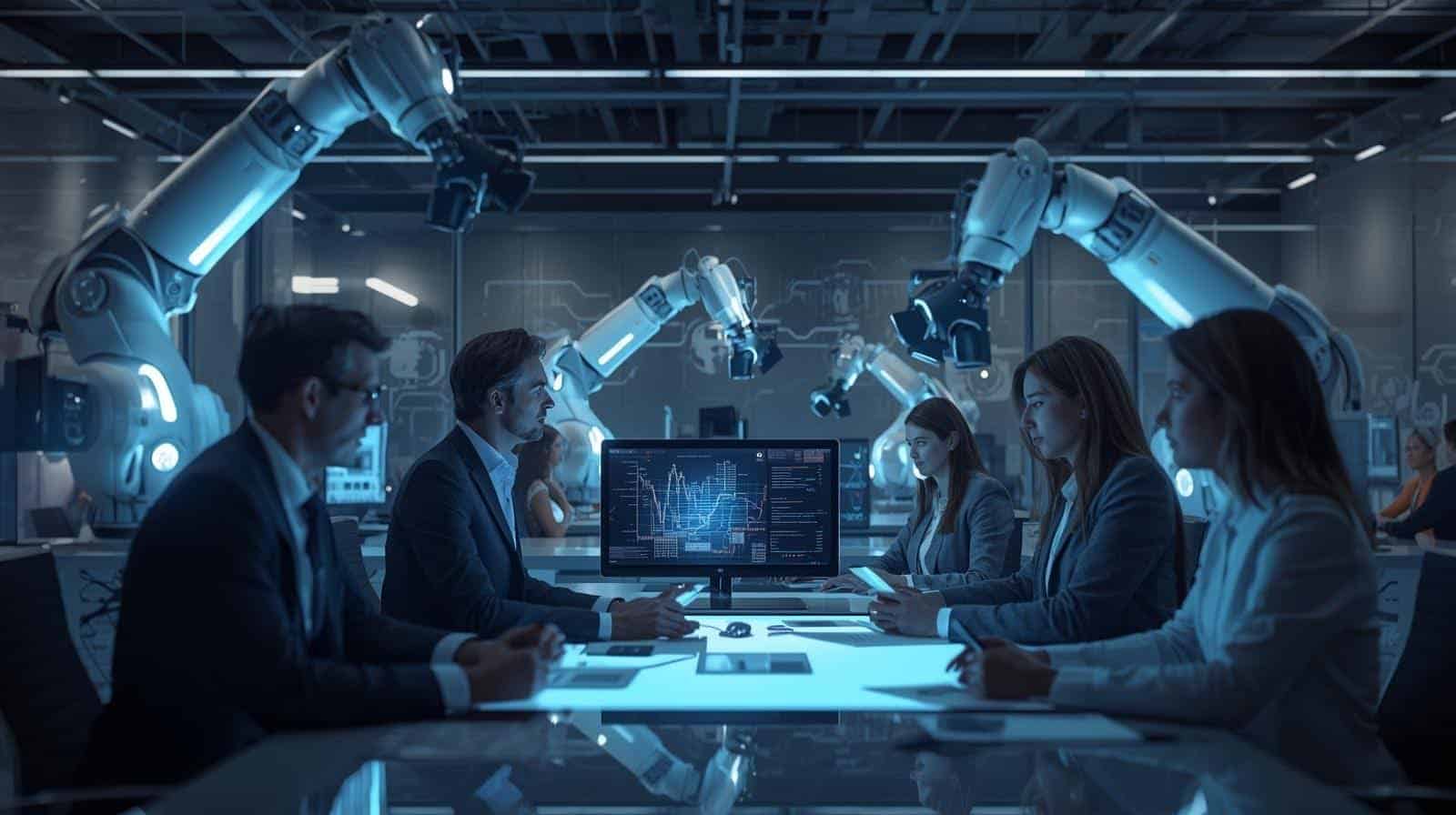
AI agents are not aimed to substitute the employees; they are created to assist them. They enable the teams to concentrate on strategic initiatives, creativity, and problem-solving by ensuring that routine tasks are taken over.
This cooperation results in a more balanced workflow, with the technology taking care of delivery and people giving direction and innovation.
This synergy can, over time, enhance a lot of productivity and job satisfaction.
Challenges in implementation
Although the advantages are obvious, there are difficulties with the implementation of AI agents within the corporate environment.
Integration can be a big challenge. Most organizations are using legacy systems that might not be readily compatible with the current AI solutions.
Another important factor is data quality. AI agents require precise and properly formatted data to work. Inaccurate data may result in inaccurate results.
Change management is also needed. Employees should be instructed to collaborate with AI systems, and organizations should have clear guidelines on how to use them.
These issues should be tackled with planning and strategy.
The future of AI in corporate business
The contribution of AI agents to business in corporations is likely to increase considerably in the years to come.
With the development of technology, these agents will become more advanced and can process even more complex workflows and make more sophisticated decisions. It is possible to anticipate a more interdepartmental integration to form single AI ecosystems which can be used to generate efficiency and innovation.
The new technologies, such as generative AI and multi-agent systems, will further expand the abilities of enterprise AI, allowing businesses to automate not only tasks but also processes.
Conclusion
Corporate business AI agents are changing the organizational operations. They help companies to be smarter by combining intelligent automation and real-time decision making to work smarter, scale faster, and remain competitive in a dynamic environment.
With the ever-changing nature of corporate challenges, the necessity of highly sophisticated and dynamic solutions is only growing. AI agents are a potent solution that can assist companies in becoming more complex and open up avenues of growth.
It will not only be the most successful corporations in 2026 that will adopt AI, but also integrate it into their processes, forming a future in which intelligent systems and human knowledge collaborate.
FAQs
Everything you need to know about our products and services
AI agents are intelligent systems that automate tasks, manage workflows, and make decisions to improve efficiency in corporate environments.
They enhance productivity, reduce operational costs, improve accuracy, and help businesses scale without increasing workforce size.
Enterprise AI refers to the use of artificial intelligence technologies across large organizations to optimize processes, improve decision-making, and drive growth.
AI agents can be used in HR, finance, customer support, operations, supply chain, and marketing.





Adnan Ghaffar is the visionary CEO of CodeAutomation.ai, a platform dedicated to transforming how businesses build software through cutting-edge automation. With over a decade of experience in software development, QA automation, and team leadership, Adnan has built a reputation for delivering scalable, intelligent, and high-performance solutions.
Under his leadership, CodeAutomation.ai has grown into a trusted name in AI-driven development, empowering startups and enterprises alike to streamline workflows, accelerate time-to-market, and maintain top-tier product quality. Adnan is passionate about innovation, process improvement, and building products that truly solve real-world problems.
More Articles
02/10/2026
What Is an Intelligence Explosion and How Could It Happen?

27/ 04/ 2026
AI security solutions: Protecting systems with intelligent defense

03/ 27/ 2026
From SEO to AEO & GEO: The evolution of search

17 March 2026
Step-by-Step Guide to Mobile App Development
29/09/2026
What Is Superintelligence? What Makes AI Superintelligent
03/ 09/ 2026