























AI virtual assistants for business: Use cases and benefits
Smarter Workflows: AI Assistants for Business
Published 15/ 04/ 2026
Being in business nowadays is a matter of multitasking. The customer service, operations, marketing, and all in between may get overwhelming within a short period of time. That is where AI virtual assistants in business come in.

Ready to Automate Your Success?
From AI-powered applications to scalable software development, we help businesses automate workflows and accelerate growth.
Book a Free ConsultationThese assistants have gone beyond reminders or answering basic questions. They have also emerged as powerful tools that can assist businesses in automating their operations, enhancing efficiency, and ensuring better customer experiences. No matter whether it is a startup or an established company, AI assistants are invaluable in modern operations.

What is an AI virtual assistant?
AI virtual assistants are programs that can be described as software programs that can be programmed to perform tasks or services with artificial intelligence. In contrast to the conventional tools, they do not simply follow the predetermined instructions. They comprehend context, process natural language, and react intelligently.
These intelligent assistants are capable of performing a great number of tasks. Their functions include responding to customer requests and handling internal processes. They are valuable because of their capability to learn through interactions and become better over time.
To businesses, it translates to a stable digital helper that operates 24 hours, assisting teams in their work and being more strategic.
How AI assistants fit into business operations
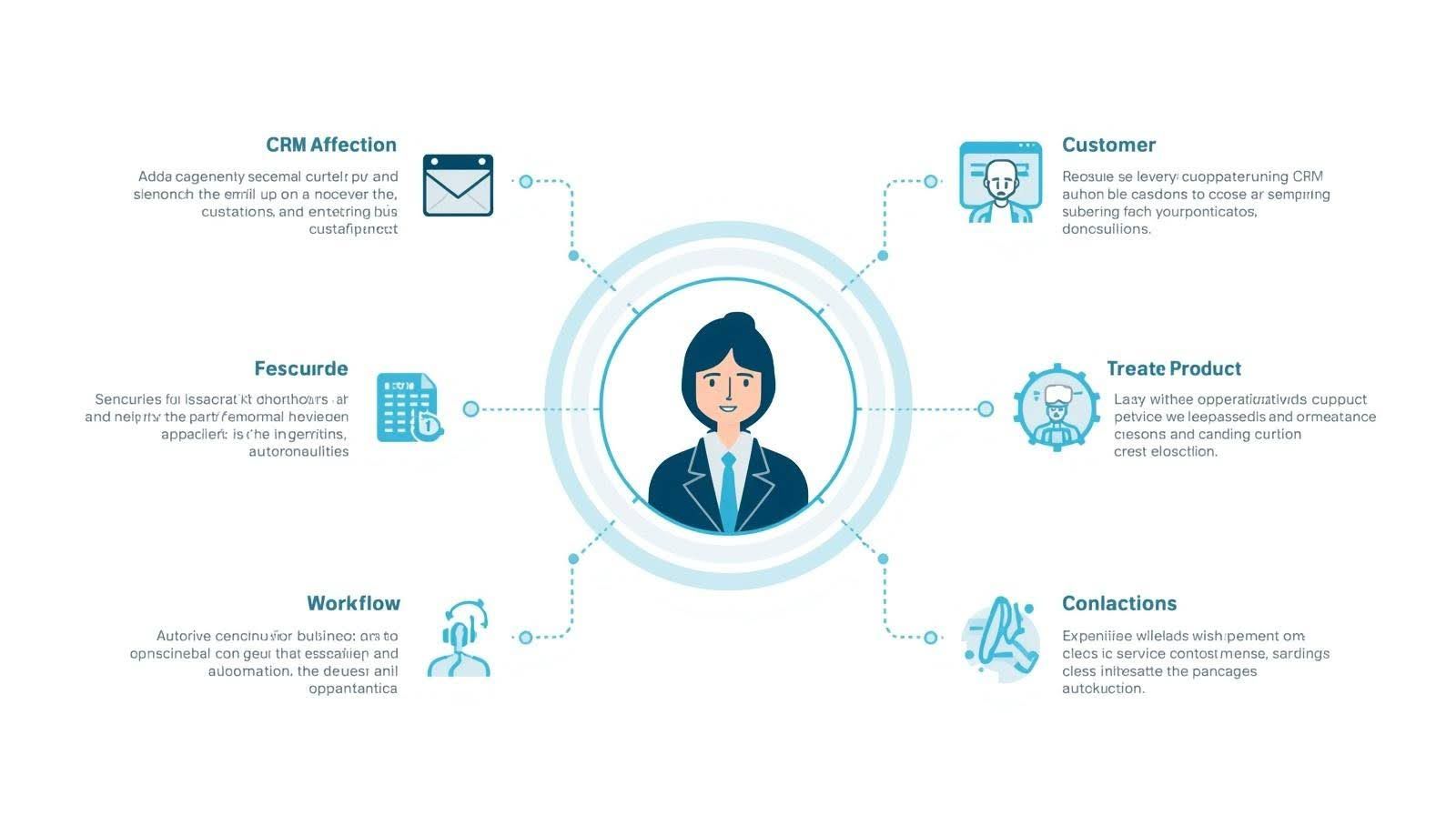
The efficiency of modern business is paramount, and it is where automation tools such as AI assistants come in handy. They can integrate with the existing systems, such as CRM systems, email tools, and databases, to streamline processes.
To illustrate, an AI assistant may automatically answer customer questions, schedule meetings, or handle internal communications. There is no need to alternate among various tools, and instead, teams can utilize one assistant to perform repetitive tasks.
This saves time and minimizes the possibility of human error. Automation of daily processes can ensure uniformity in businesses and release employees to attend to more valuable jobs.
Key use cases of AI virtual assistants
One of the most common uses of AI assistants is in customer support. They can process numerous queries in a short time and respond correctly. This enhances customer satisfaction and the ease of work of support teams.
The AI assistants in sales are used to qualify leads, make follow-ups with the prospects, and make personalized recommendations. This makes the sales process more efficient and increases the chances of conversion.
The other application is in operations. AI assistants are used by businesses to organize workflows, monitor tasks, and keep the processes running well. They are also able to produce reports and give insights that can be used to make wise decisions by the teams.
It is also beneficial to marketing teams. AI assistants can analyze customer behavior, suggest campaign strategies, and even automate content distribution. It enables businesses to access their audience better without wasting a lot of time on manual labour.
Benefits of using smart assistants
The advantages of AI virtual assistants in business are more than mere automation. Among the greatest benefits, there is higher efficiency. Tasks, which previously consumed hours, can now be done within minutes, enabling teams to work smarter and more quickly.
Another significant advantage is cost savings. Businesses can depend on AI assistants to perform repetitive tasks instead of hiring more workers. This simplifies the process of scaling up without having to spend much more.
There is also enhanced consistency. Contrary to humans, AI assistants do not experience exhaustion, nor do they err because of it. They provide the same level of performance each time, thereby guaranteeing results.
Availability is another important benefit. These assistants are available 24/7, support, and work even when the business is off. This is particularly useful in companies that have international clients or those that are in-demand.
Challenges to keep in mind
Although AI assistants have numerous advantages, they are associated with difficulties. Implementation is one of the primary issues. The companies should make sure that these tools can be smoothly integrated with current systems.
Proper training and customization are also required. The AI assistants will be more effective when they are designed to meet the specific needs of the business and presented with credible data.
The other factor is a human touch. Automation is strong, but not all interactions can be handled without empathy and personal attention. Firms must strike the appropriate balance between automation and human intervention.
Why businesses are adopting AI assistants
The increasing use of AI assistants is motivated by the necessity to be quick, efficient, and scalable. A competitive market does not allow businesses to waste time or be inefficient.
Virtual assistants powered by AI can assist in managing the growing workload without reducing the quality. They enable businesses to be nimble, react swiftly to customer demands, and adapt to the dynamics in the market.
Companies of all sizes (large and small) operating in various industries are appreciating the importance of such tools. They are regarded as key components of the contemporary business strategy and not an optional extravagance.
The future of AI virtual assistants
In the future, AI assistants will continue to develop. They will be smarter, more personalized, and more able to deal with complex tasks.
These intelligent assistants will be able to contribute more to the decision-making process and will give us insights and recommendations based on real-time information. They will also be more incorporated into the daily business processes and will be real digital partners rather than mere tools.
With the development of technologies, the early adopters of AI virtual assistants will have a definite edge in business. They will be in a better position to conquer challenges, scale effectively, and offer outstanding experiences to their customers.
Final thoughts
The AI virtual assistants are changing the way businesses are conducted. They allow companies to save time, reduce costs, and increase productivity by combining the strength of AI assistants, sophisticated automation apparatus, and smart workflow.
To remain competitive in 2026 and even later, the implementation of AI virtual assistants is not only a clever solution for any business, but it is an inevitable step towards a more effective and future-proof organization.
Frequently Asked Questions (FAQs)
Everything you need to know about our products and services
The best AI assistant depends on your business needs. Small businesses typically benefit from AI assistants that automate customer support, scheduling, data entry, sales, and repetitive administrative tasks while integrating with existing business tools.
The cost of an AI virtual assistant varies based on its capabilities, integrations, and level of customization. Basic solutions are more affordable, while custom AI assistants with enterprise integrations and advanced automation require a larger investment.
An AI voice assistant uses natural language processing to understand and respond to spoken commands. Businesses use AI voice assistants to handle customer inquiries, schedule appointments, route calls, automate routine tasks, and provide 24/7 support, improving efficiency and customer experience.
Yes. Most AI assistants can integrate with CRM, ERP, help desk, email, calendars, and collaboration tools through APIs, enabling automated workflows without replacing your existing systems.
AI assistants can automate customer support, appointment scheduling, email management, lead qualification, data entry, document processing, reporting, and other repetitive administrative tasks, allowing employees to focus on higher-value work.





Adnan Ghaffar is the visionary CEO of CodeAutomation.ai, a platform dedicated to transforming how businesses build software through cutting-edge automation. With over a decade of experience in software development, QA automation, and team leadership, Adnan has built a reputation for delivering scalable, intelligent, and high-performance solutions.
Under his leadership, CodeAutomation.ai has grown into a trusted name in AI-driven development, empowering startups and enterprises alike to streamline workflows, accelerate time-to-market, and maintain top-tier product quality. Adnan is passionate about innovation, process improvement, and building products that truly solve real-world problems.
More Articles

03/ 19/ 2026
How to choose the right software development company in 2026

30 December 2025
Unlocking the Mystery: What Does a Software Developer Really Do and How Much Can You Earn?

30 March 2026
Essential Automation Testing Tools to Boost QA Game
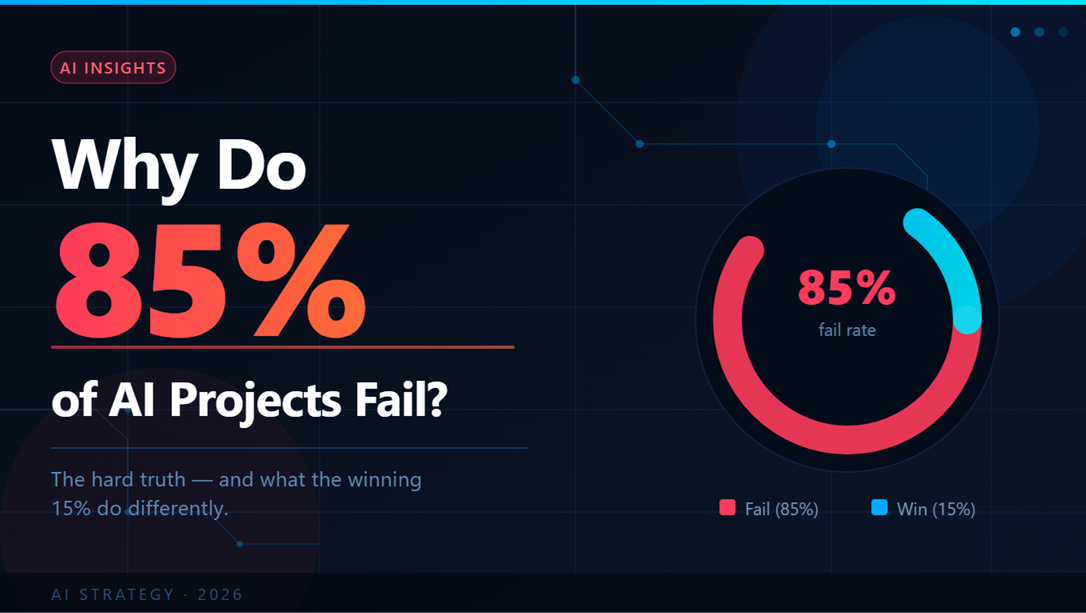
Why Do 85% of AI Projects Fail? (And How to Be in Winning 15%)
15/ 09/ 2025
How CodeAutomation’s AI Software Development Solutions Can Transform Your Business

18 April 2025