






















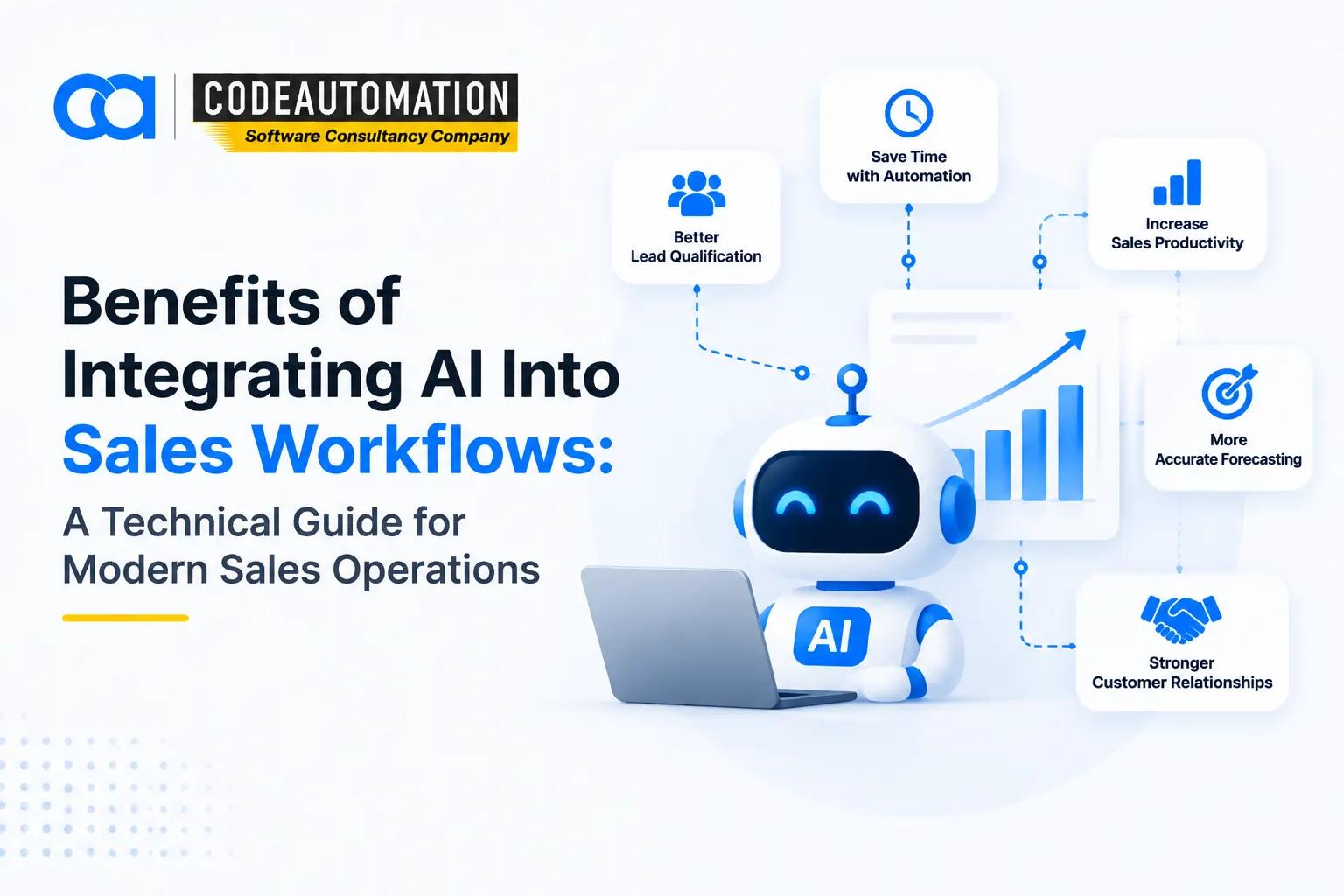
Benefits of Integrating AI Into Sales Workflows: A Technical Guide for Modern Sales Operations
Published 24/09/2026
The benefits of integrating AI into sales workflows extend far beyond automating repetitive administrative tasks. Modern sales organizations can use artificial intelligence to connect CRM data, customer signals, qualification logic, outreach, forecasting, and pipeline operations into intelligent execution layers.

Ready to Automate Your Success?
From AI-powered applications to scalable software development, we help businesses automate workflows and accelerate growth.
Book a Free ConsultationThe benefits of integrating AI into sales workflows extend far beyond automating repetitive administrative tasks. Modern sales organizations can use artificial intelligence to connect CRM data, customer signals, qualification logic, outreach, forecasting, and pipeline operations into intelligent execution layers.
AI in sales workflows can analyze structured and unstructured data, identify buying signals, recommend next actions, generate personalized communications, and continuously update customer records. Recent industry research increasingly points toward AI being embedded across complete commercial workflows rather than deployed as isolated productivity tools.
For technology-driven organizations, the objective is not simply to replace manual tasks. The objective is to engineer a more adaptive sales system in which data, business rules, machine learning models, generative AI, and human decision-making operate together.
What Are AI-Enabled Sales Workflows?
A traditional sales workflow typically consists of predefined stages: lead capture, qualification, outreach, meetings, opportunity management, proposal generation, negotiation, and closing.
AI sales automation adds an intelligence layer to these processes. Instead of executing only static rules, an AI-enabled workflow can interpret data, identify patterns, generate content, prioritize opportunities, and trigger actions based on contextual signals.
For example, a workflow can automatically ingest a new lead, enrich its company data, evaluate engagement behavior, assign an intent score, generate an appropriate outreach sequence, and route the opportunity to the correct representative.
This is the foundation of AI sales workflow automation: connecting individual automation steps into an intelligent process.
Key Benefits of Integrating AI Into Sales Workflows
1. Automate High-Volume Sales Operations
One of the most immediate benefits of integrating AI into sales workflows is reducing repetitive operational work.
AI can automate CRM updates, meeting summaries, lead routing, follow-up reminders, data enrichment, email drafting, and other administrative processes. This reduces the amount of manual interaction required across multiple sales systems.
Modern AI sales agents can also execute specific tasks autonomously or semi-autonomously, particularly when connected to CRM and sales-engagement systems.
For organizations evaluating AI for sales teams, this means representatives can spend more time on discovery, negotiation, relationship development, and complex account strategy.
2. Improve Lead Qualification and Prioritization
Traditional qualification often depends on manual research and subjective judgment. AI can introduce a more consistent, data-driven approach.
An AI workflow can evaluate firmographic information, historical interactions, website behavior, email engagement, buying intent, and previous conversion patterns.
This enables sales process automation around qualification and routing. Predictive models can identify which prospects are most likely to progress, while lower-intent leads can enter automated nurturing sequences.
Modern CRM platforms increasingly use predictive scoring to analyze behavioral and historical data and rank opportunities according to their likelihood of conversion.
3. Personalize Sales Outreach at Scale
Generic outbound communication is difficult to scale without sacrificing relevance. AI-powered systems can analyze account information and interaction history before generating personalized messaging.
AI-powered sales workflows can dynamically customize email content, recommendations, follow-up timing, and messaging based on customer context.
This makes personalized sales outreach more scalable without requiring representatives to manually research every account.
Generative AI can also synthesize product information, customer profiles, and previous interactions to help representatives prepare more relevant conversations.
4. Increase Sales Productivity
Sales representatives frequently operate across CRM platforms, email clients, engagement systems, spreadsheets, meeting software, and internal knowledge bases.
AI can function as an orchestration layer between these systems.
AI sales tools can summarize customer histories, surface relevant information, recommend next actions, generate content, and automate record updates.
This contributes directly to AI sales productivity tools and broader sales productivity automation initiatives.
The objective is not to maximize the number of automated actions. Instead, businesses should reduce workflow friction so representatives can allocate more time to revenue-generating activities.
5. Improve Forecasting and Pipeline Visibility
Sales forecasting traditionally depends heavily on historical performance, representative judgment, and manually maintained CRM data.
AI can analyze pipeline velocity, historical conversion rates, engagement signals, opportunity attributes, and other variables to generate more dynamic forecasts.
This creates opportunities for AI sales forecasting and predictive sales analytics.
With sales forecasting with AI, revenue teams can identify pipeline risks earlier, detect stalled opportunities, and model potential outcomes using continuously updated data.
However, forecasting quality depends heavily on data quality. An AI model trained on incomplete, duplicated, or outdated CRM records will produce unreliable outputs.
6. Accelerate Customer Engagement
Customer interactions generate valuable signals across emails, calls, chat sessions, website activity, and CRM records.
AI customer engagement automation can analyze these signals and determine when a prospect requires follow-up, additional information, escalation, or human intervention.
AI-powered customer interactions can operate across multiple channels while maintaining context from previous conversations.
This is particularly useful for organizations handling large inbound volumes where response speed directly affects the customer journey.
7. Strengthen CRM Operations
A CRM should function as a reliable operational data layer rather than simply a database of contact records.
AI CRM automation can update records, summarize conversations, identify missing information, recommend actions, and trigger downstream workflows.
Combined with CRM workflow automation, this creates an intelligent operating layer around the existing CRM infrastructure.
An AI-powered CRM can therefore connect customer data with decision logic and execution mechanisms rather than requiring sales representatives to manually coordinate every step.
8. Enable Scalable AI Sales Agents
AI agents represent a shift from simple task automation toward systems capable of executing multi-step workflows.
An agent might research an account, identify relevant signals, prepare outreach, schedule a meeting, update CRM records, and escalate the opportunity when human judgment is required.
The important architectural distinction is that agents should operate within defined permissions, business rules, data boundaries, and human-approval mechanisms.
Recent research describes this transition as moving from isolated AI use cases toward connected, end-to-end commercial workflows involving both humans and AI agents.
How AI Sales Workflow Automation Works
A production-grade AI workflow typically contains several interconnected layers:
Data ingestion: CRM records, website events, emails, product usage, and external enrichment data.
Data processing: Cleaning, normalization, entity resolution, and feature engineering.
AI inference: Classification, scoring, prediction, summarization, or generative AI.
Decision logic: Business rules determine the next workflow action.
Execution: APIs, CRM actions, messaging platforms, scheduling systems, and other integrations execute tasks.
Human escalation: High-value or sensitive decisions are routed to representatives.
Feedback loop: Outcomes are captured and used to improve models, prompts, rules, and workflows.
AI Use Cases Across the Sales Pipeline
The benefits of integrating AI into sales workflows become more measurable when organizations map AI capabilities to specific pipeline stages.
Prospecting and Lead Generation
AI lead generation automation can identify potential accounts, enrich prospect records, and prioritize targets based on predefined ICP characteristics.
Qualification
AI lead qualification can evaluate intent, engagement, fit, and historical conversion signals before assigning leads to sales representatives.
Pipeline Management
Sales pipeline automation can identify stalled opportunities, trigger follow-ups, update opportunity stages, and surface accounts requiring intervention.
Customer Intelligence
AI can convert fragmented customer data into actionable AI customer insights, helping representatives understand account behavior and engagement patterns.
Revenue Operations
Organizations can combine these capabilities with revenue operations automation to synchronize sales, marketing, customer success, and operational data.
This approach supports broader customer relationship management automation and creates a connected revenue infrastructure.
Implementing AI Without Creating More Complexity
Successful AI adoption starts with workflow design rather than tool selection.
First, identify processes with high transaction volume, repetitive decisions, measurable bottlenecks, or significant administrative overhead. Then define the data required to automate those decisions.
Companies should also establish governance for data access, model outputs, prompt management, auditability, security, and human approval.
The most effective implementation strategy is often incremental: begin with a measurable workflow, establish baseline KPIs, integrate the required systems, and expand once the workflow demonstrates reliable performance.
Measuring the Impact of AI Sales Automation
The benefits of integrating AI into sales workflows should be evaluated using operational and revenue metrics.
Useful KPIs include:
- Lead response time
- Lead-to-opportunity conversion
- Qualification accuracy
- Sales cycle duration
- Opportunity velocity
- Representative selling time
- Forecast accuracy
- Follow-up completion rate
- Pipeline coverage
- Revenue per representative
- Cost per qualified opportunity
Why Businesses Need AI Sales Workflow Automation
As sales operations scale, managing lead qualification, CRM updates, follow-ups, customer engagement, and pipeline decisions manually can create significant operational bottlenecks. Businesses need more than standalone AI tools—they need connected workflows that can move data, trigger actions, and apply AI-driven decision logic across the sales process.
With AI sales workflow automation, businesses can connect CRM systems, AI models, APIs, customer data, and business rules into a unified workflow. For example, a new lead can be automatically enriched, qualified, scored, routed to the right sales representative, and placed into a personalized follow-up sequence without requiring manual intervention at every stage.
This is where AI-powered business workflow automation can help organizations build scalable automation around their existing sales infrastructure. By combining AI with workflow orchestration, businesses can reduce repetitive tasks, improve data flow between systems, and create more efficient sales operations while keeping human teams involved in high-value decisions.
Frequently Asked Questions (FAQs)
Everything you need to know about our products and services
The main benefits include reducing repetitive work, accelerating lead qualification, improving personalization, strengthening CRM data quality, supporting forecasting, increasing sales productivity, and enabling faster customer engagement.
AI adds intelligence to conventional automation by interpreting data, recognizing patterns, generating recommendations, predicting outcomes, and selecting workflow actions based on context rather than relying exclusively on static rules.
AI sales agents are primarily designed to augment sales teams. They can handle repetitive or data-intensive tasks, while representatives remain responsible for relationship building, complex negotiations, strategic decisions, and situations requiring human judgment.
Common inputs include contact and account records, opportunity history, engagement activity, email interactions, meeting data, product usage, conversion history, and relevant enrichment data. Clean and consistently structured data is essential for reliable AI outputs.
Start with one high-value workflow such as lead qualification, follow-up automation, CRM data management, or forecasting. Define a measurable KPI, prepare the underlying data, integrate the required systems, establish human-approval controls, and expand after validating the results.





Adnan Ghaffar is the visionary CEO of CodeAutomation.ai, a platform dedicated to transforming how businesses build software through cutting-edge automation. With over a decade of experience in software development, QA automation, and team leadership, Adnan has built a reputation for delivering scalable, intelligent, and high-performance solutions.
Under his leadership, CodeAutomation.ai has grown into a trusted name in AI-driven development, empowering startups and enterprises alike to streamline workflows, accelerate time-to-market, and maintain top-tier product quality. Adnan is passionate about innovation, process improvement, and building products that truly solve real-world problems.
More Articles
28/08/2026
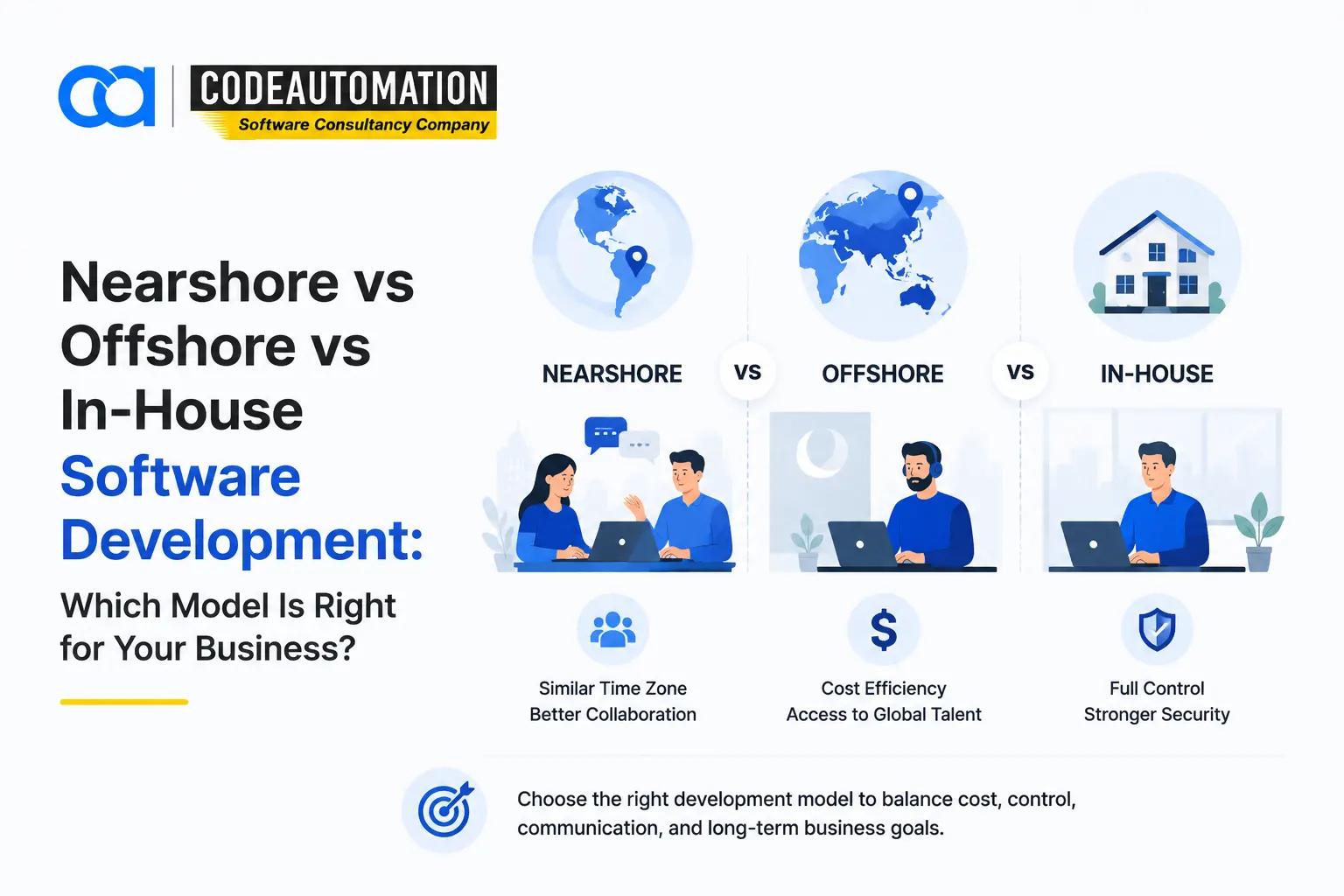
Nearshore vs Offshore vs In-House Software Development: Which Model Is Right for Your Business?

03/ 19/ 2026
How to choose the right software development company in 2026
02/09/2026
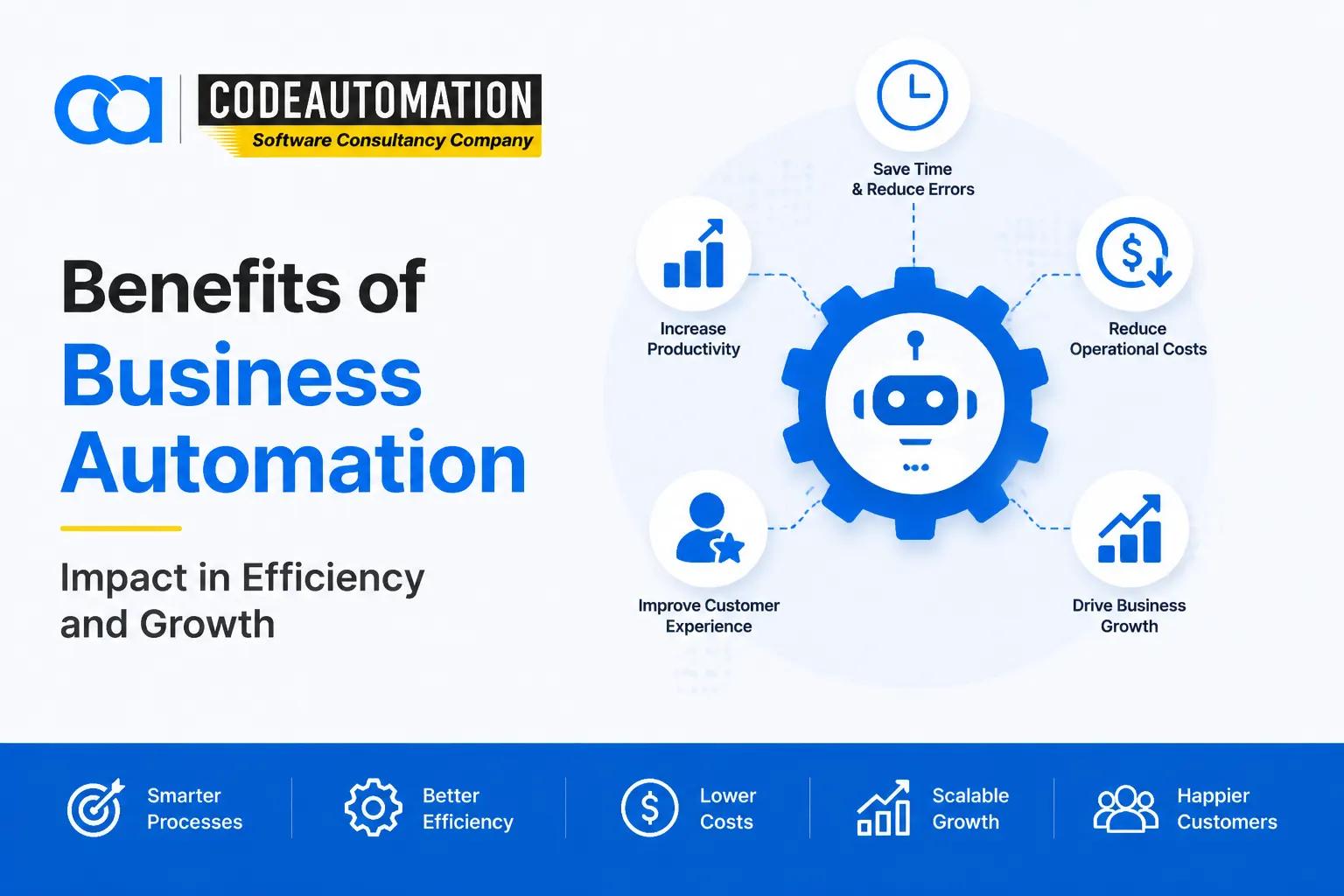
Benefits of Business Automation: How Businesses Improve Efficiency, Reduce Costs, and Scale Faster

18 April 2025
Can You Develop Mobile Apps with Python? Everything You Need to Know

03/ 05/ 2026
AI Agent for Operations: Simplify Complex Workflows in 2026

02/ 21/ 2026